
What's Happening?
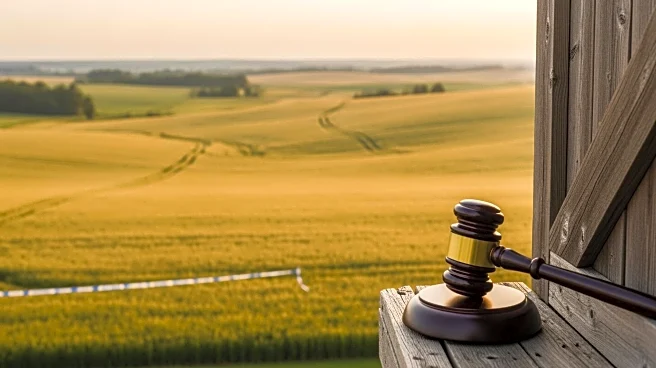
In January 2026, over 2,700 acres of Illinois farmland are set to be auctioned, reflecting a broader trend of slowing growth in farmland values. According to the USDA's 'Agricultural Land Values Bulletin'
published in August 2025, the average value of Illinois farm real estate increased by 2.6% from 2024, reaching $8,930 per acre. Despite this rise, experts note that real-world sales remain soft, attributed to lower farm incomes in 2024 and projected for 2025. The auction includes significant parcels in Pike, Adams, and Whiteside counties, with varying productivity indices and potential for recreational use. The sales are managed by Sullivan Auctioneers and Hertz Real Estate Services, highlighting continued interest from outside investors and the impact of strong debt-to-asset ratios.
Why It's Important?
The auction and the reported increase in farmland values are significant as they reflect the complex dynamics of the agricultural economy in Illinois. While the rise in land values suggests a positive trend, the underlying economic conditions, such as lower farm incomes, pose challenges for farmers. The interest from outside investors indicates a shift in the agricultural investment landscape, potentially affecting local farmers' ability to compete for land. This situation underscores the importance of understanding the broader economic factors influencing farmland values, including off-farm income and investor interest, which could shape future agricultural policies and investment strategies.
What's Next?
As the auctions proceed, stakeholders will closely monitor the outcomes to gauge the real-world impact on farmland values. The results could influence future investment decisions and policy-making in the agricultural sector. Additionally, the ongoing economic challenges may prompt discussions among policymakers and industry leaders about supporting local farmers and ensuring sustainable growth in the agricultural economy. The auctions may also set precedents for future land sales, affecting pricing strategies and investor interest in the region.
Beyond the Headlines
The slowing growth in farmland values raises questions about the long-term sustainability of current agricultural practices and the role of external investors in shaping the rural economy. Ethical considerations may arise regarding land ownership and the impact on local communities. The trend also highlights the need for innovative solutions to support farmers facing economic pressures, such as diversifying income sources and improving productivity through technology and sustainable practices.