



What's Happening?
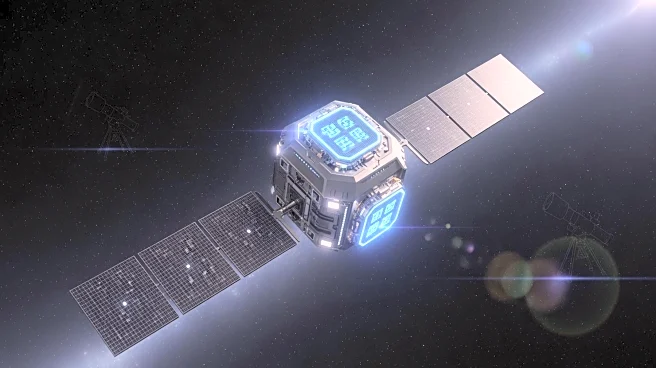
Elon Musk has unveiled a plan to deploy up to one million solar-powered satellites as part of a new orbital data center initiative. These satellites are intended to provide a virtually unlimited source of computing power for artificial intelligence (AI).
Musk claims that generating AI compute in space will be more cost-effective than terrestrial data centers within two to three years. The 'mini' version of these satellites is expected to be larger than SpaceX's Starship rocket, with its size primarily due to its solar arrays. Musk also announced the construction of a new facility, 'Terafab,' to produce the necessary AI chips, estimating a cost of $20 billion and an annual output of up to 200 billion chips. However, astronomers have expressed concerns that the large satellite constellations could obstruct deep space observations.
Why It's Important?
The development of orbital data centers could significantly impact the technology and space industries by providing a new method of computing power generation. If successful, Musk's plan could reduce the costs associated with AI computing, potentially accelerating advancements in AI technology. However, the initiative also poses challenges, particularly for the field of astronomy. The sheer size and number of satellites could interfere with astronomical research by blocking views of deep space. This raises questions about the balance between technological advancement and the preservation of scientific research capabilities. The financial implications are also substantial, with the estimated cost of deploying the satellites reaching over a trillion dollars, highlighting the ambitious nature of Musk's vision.
What's Next?
The next steps involve the construction of the Terafab facility and the production of AI chips, which are crucial for the success of the orbital data centers. Musk's timeline suggests that these developments could occur within the next few years. Meanwhile, the scientific community may continue to voice concerns and seek regulatory measures to mitigate the impact on astronomical research. The financial feasibility of the project will also be closely scrutinized, especially given the high costs involved. Stakeholders in the space and technology sectors will likely monitor the project's progress and its potential implications for the industry.
Beyond the Headlines
Beyond the immediate technological and financial aspects, Musk's plan raises broader questions about the ethical and environmental implications of deploying such a large number of satellites. The potential for space debris and the impact on the night sky are concerns that may need to be addressed. Additionally, the project highlights the growing influence of private companies in space exploration and technology development, which could lead to shifts in how these sectors are regulated and managed. The balance between innovation and responsibility will be a key consideration as the project progresses.