



What's Happening?
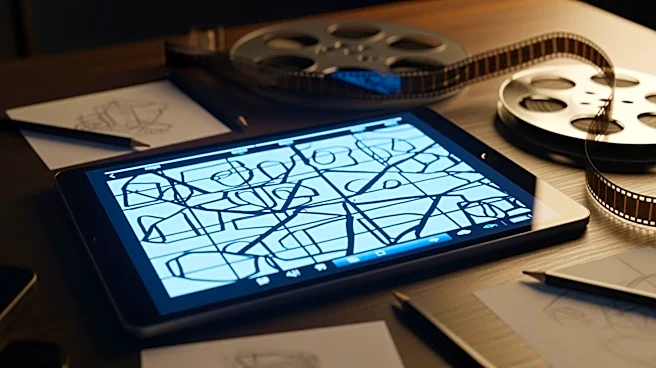
Martin Scorsese, a prominent film director, has recently faced criticism from the film industry after announcing his investment in an AI company and his use of AI-generated storyboards. Scorsese has partnered with Black Forest Labs, a German-based venture
specializing in text-to-image generative AI, to enhance the preproduction process of his films. He argues that this technology allows for more efficient communication of his creative vision to his cast and crew, describing the process as 'creatively freeing.' However, this move has sparked backlash from storyboard and concept artists, who feel that AI undermines their craft. Notable artists like Karla Ortiz and Samuel Deats have publicly criticized Scorsese, accusing him of disregarding the contributions of traditional artists. Despite the controversy, Scorsese maintains that AI is a tool to enhance storytelling and not a replacement for human creativity.
Why It's Important?
The controversy surrounding Scorsese's use of AI in filmmaking highlights a broader debate within the industry about the role of technology in creative processes. As AI becomes more integrated into various sectors, its impact on traditional roles and skills is increasingly scrutinized. For the film industry, this raises questions about the future of jobs for storyboard artists and the potential for AI to alter the creative landscape. While AI can streamline production and reduce costs, it also poses ethical concerns about the value of human artistry and the potential for job displacement. This situation reflects a larger societal challenge of balancing technological advancement with the preservation of human skills and employment.
What's Next?
As the film industry continues to grapple with the integration of AI, stakeholders may need to establish guidelines or frameworks to ensure that technology complements rather than replaces human creativity. This could involve setting ethical standards for AI use in creative fields and providing support for artists to adapt to new tools. Additionally, the industry might see increased dialogue between technologists and artists to find a middle ground that respects both innovation and traditional craftsmanship. The outcome of this debate could influence how other creative industries approach AI, potentially setting precedents for its use in art, music, and beyond.
Beyond the Headlines
The use of AI in filmmaking also raises cultural and philosophical questions about the nature of creativity and authorship. As AI tools become more sophisticated, the line between human and machine-generated art may blur, challenging traditional notions of originality and artistic expression. This could lead to a reevaluation of what constitutes art and who is considered an artist. Furthermore, the reliance on AI in creative processes might influence the types of stories told and the diversity of voices represented in media, as algorithms could inadvertently perpetuate biases present in their training data.