





What's Happening?
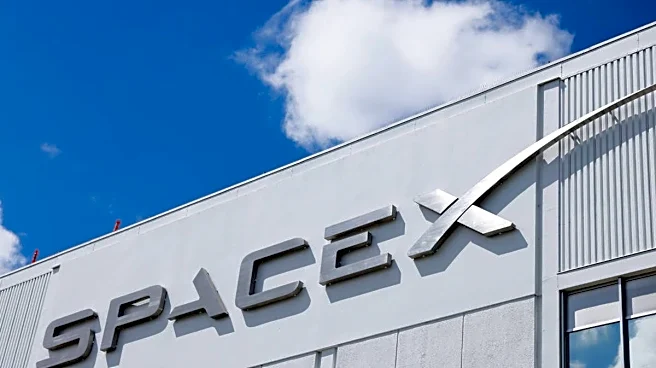
Goldman Sachs is set to lead a consortium of investment banks in managing the initial public offering (IPO) of SpaceX, which is anticipated to be the largest in history. SpaceX, an aerospace giant, has filed its S-1, indicating plans to go public this
summer. The company, valued at up to $2 trillion, reported a $4.9 billion loss on $18.7 billion in revenue for 2025. The IPO will involve 23 firms, with Goldman Sachs, Morgan Stanley, Bank of America, Citigroup, and JPMorgan Chase as the primary bookrunners. The IPO is expected to generate significant fees for these banks, potentially amounting to $1.125 billion if a conservative fee of 1.5% is applied to a $75 billion offering. This move comes as the IPO market experiences a resurgence, with major banks reporting increased activity in equity capital markets.
Why It's Important?
The SpaceX IPO represents a significant event in the financial markets, potentially reshaping the landscape of equity capital markets. For investment banks, the deal offers both prestige and substantial financial rewards, reinforcing their roles in major financial transactions. The IPO's success could set a precedent for future large-scale public offerings, influencing how companies approach going public. Additionally, the involvement of major banks like Goldman Sachs and Morgan Stanley highlights the competitive nature of securing roles in high-profile deals. The IPO's outcome could impact investor confidence and market dynamics, particularly in the aerospace and technology sectors.
What's Next?
As the IPO approaches, investment banks will engage in discussions with institutional investors to gauge interest and set the stage for the public offering. The roadshow, a critical phase in the IPO process, will involve presentations to potential investors to generate interest and secure commitments. The performance of SpaceX's stock post-IPO will be closely monitored, as it could influence future IPOs and the valuation of similar companies. The banks involved will also focus on stabilizing the stock price after the IPO to ensure a successful market debut.