
What's Happening?
The US Navy has entered into a five-year, indefinite-delivery/indefinite-quantity (IDIQ) contract with Gecko Robotics, valued at up to USD 71 million. This contract aims to deploy artificial intelligence
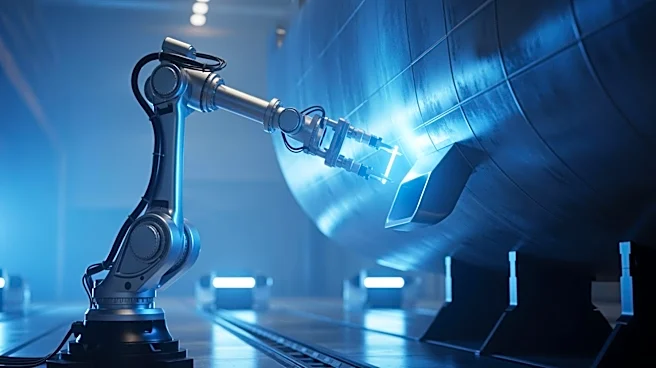
(AI) and robotics to assess and maintain the health of military assets. An initial award of USD 54 million will cover 18 ships in the US Pacific Fleet, including destroyers, amphibious warships, and littoral combat ships. Gecko Robotics' TOKA 5 robotic inspection system, which utilizes ultrasonic sensor technology, was showcased at the Navy League's Sea-Air-Space exhibition. The technology is designed to identify necessary repairs up to 50 times faster and more accurately than traditional manual methods, thereby reducing maintenance delays and enhancing battle readiness.
Why It's Important?
This contract represents a significant advancement in the use of AI and robotics within the US Navy, potentially setting a precedent for future military maintenance operations. By leveraging advanced technology, the Navy aims to improve the efficiency and accuracy of ship maintenance, which is crucial for maintaining operational readiness and national security. The integration of such technology could lead to cost savings and reduced downtime for naval vessels, providing a strategic advantage. Additionally, this move underscores the growing importance of AI and robotics in defense applications, which could influence future procurement and operational strategies across the military.
What's Next?
As Gecko Robotics begins implementing its technology across the designated ships, the Navy will likely monitor the effectiveness and efficiency of these systems closely. Successful deployment could lead to broader adoption across other fleets and military branches. Additionally, the outcomes of this contract may influence future defense contracts and the integration of AI and robotics in other areas of military operations. Stakeholders, including defense contractors and technology firms, will be watching closely to assess the impact and potential for similar applications in other sectors.