





What's Happening?
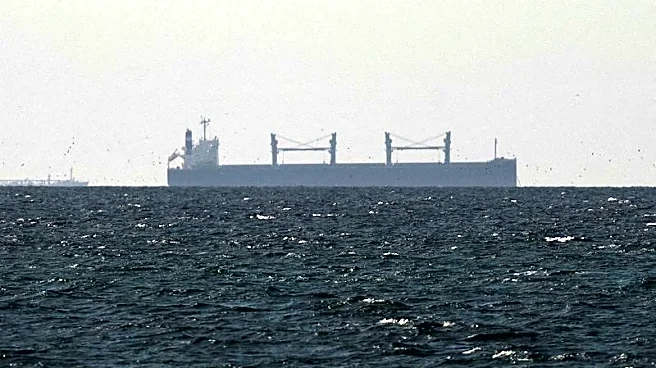
Gold prices have increased following the announcement by Iran's foreign minister that the Strait of Hormuz is open for passage during a ceasefire. This development has led to a decrease in oil prices, easing inflation concerns and reviving expectations
for interest rate cuts. Spot gold rose by 1.5% to $4,860.39 per ounce, with U.S. gold futures also seeing an increase. The reopening of the strait is seen as a key event, potentially pushing gold prices above $5,000 per ounce. The U.S. dollar and oil prices have fallen, making gold more attractive to international investors. The recent military actions by the U.S. and Israel in Iran had previously caused gold prices to slip due to inflation fears.
Why It's Important?
The reopening of the Strait of Hormuz is significant for global trade and energy markets, as it is a critical chokepoint for oil transportation. The easing of tensions and potential interest rate cuts could stabilize global markets and reduce inflationary pressures. For investors, gold remains a safe haven asset, and its rising prices reflect ongoing geopolitical uncertainties. The situation highlights the interconnectedness of geopolitical events and financial markets, with potential implications for global economic stability.
What's Next?
The future of gold prices will depend on the resolution of the conflict in the Middle East and the stability of oil prices. Continued geopolitical tensions could sustain high gold prices, while a lasting peace agreement might lead to a decrease. Investors will be closely monitoring central bank policies and interest rate decisions, which could influence gold's attractiveness as an investment. Additionally, the response of other commodities and currencies to these developments will be crucial in shaping market dynamics.