






What's Happening?
Consumer Reports has released its annual Top Picks list, focusing this year on vehicles built in the United States. The list, which traditionally evaluates the best cars available, now highlights the increasing globalization of the auto industry. Despite
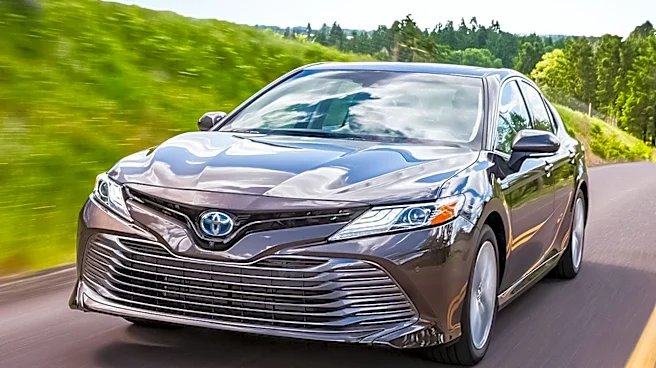
narrowing the focus to U.S.-built models, the rankings remain largely unchanged, indicating that many top-performing vehicles are already produced domestically. This includes models from brands like Honda, Toyota, BMW, and Subaru, which have significant manufacturing operations in the U.S. The Honda Civic, built in Indiana, continues to be a top pick for its performance and efficiency. Similarly, the Toyota Camry, produced in Kentucky, remains a reliable choice in the midsize category. The list also underscores the dominance of SUVs in the market, with models like the Subaru Crosstrek and Forester, both built in Indiana, ranking highly for their practicality and reliability.
Why It's Important?
The focus on U.S.-built vehicles by Consumer Reports highlights the evolving nature of the automotive industry, where the distinction between domestic and foreign brands is increasingly blurred. This shift has significant implications for the U.S. economy and labor market, as it underscores the importance of domestic manufacturing in a globalized industry. The presence of foreign brands with U.S. manufacturing plants suggests a robust job market and economic activity within the country. Additionally, the emphasis on SUVs and electric vehicles (EVs) reflects changing consumer preferences and the industry's adaptation to these trends. The inclusion of EVs like the Tesla Model Y, built in Texas, indicates a growing acceptance and demand for sustainable transportation options.
What's Next?
As the automotive industry continues to evolve, the focus on U.S.-built vehicles may influence future manufacturing decisions by automakers. Companies might increase their investment in domestic production facilities to capitalize on the growing consumer preference for locally built cars. This could lead to more job opportunities and economic growth in regions with significant automotive manufacturing presence. Additionally, the continued emphasis on SUVs and EVs suggests that automakers will likely prioritize these segments in their future product development strategies. The industry's shift towards sustainability and efficiency will also drive innovation in vehicle design and technology.