






What's Happening?
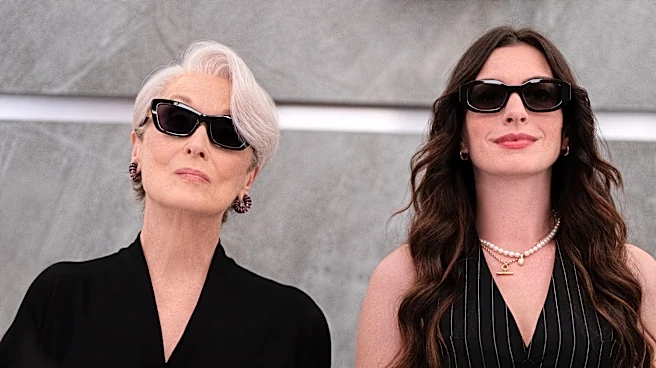
Meryl Streep has expressed her concerns about the current state of the film industry, particularly the prevalence of superhero movies. During a press tour for 'The Devil Wears Prada 2,' Streep, alongside co-stars Anne Hathaway and Emily Blunt, discussed
how the focus on clear-cut heroes and villains in modern films has led to a lack of nuanced storytelling. Streep argued that the most compelling stories come from characters who are not easily categorized as purely good or evil. She reprises her role as Miranda Priestly in the sequel, which revisits the high fashion world two decades after the original film. Streep also shared insights into her experience negotiating her salary for the original 2006 film, revealing that she initially declined the offer but returned after the studio agreed to her terms, doubling her original salary.
Why It's Important?
Streep's comments highlight a broader conversation about the direction of the film industry and the impact of blockbuster superhero films on storytelling. Her critique suggests a need for more diverse narratives that explore complex characters, which could influence filmmakers and studios to consider alternative storytelling approaches. This shift could benefit audiences seeking more varied and thought-provoking content. Additionally, Streep's experience with salary negotiations underscores ongoing discussions about pay equity in Hollywood, particularly for women and veteran actors, potentially encouraging more transparent and fair compensation practices.
What's Next?
As 'The Devil Wears Prada 2' hits theaters, it may prompt further discussions about the types of stories audiences want to see and the role of major studios in shaping film narratives. The film's engagement with themes like artificial intelligence, as mentioned by Streep and Hathaway, could also spark interest in how technology is portrayed in cinema. Industry stakeholders, including filmmakers, actors, and producers, might respond to Streep's critique by exploring more complex and diverse storytelling avenues, potentially leading to a shift in the types of films produced in the future.