
What's Happening?
UniverCell, a battery manufacturing company based in Flintbek, Germany, has raised €30 million in a Series B funding round. The investment was co-led by the DeepTech & Climate Fonds (DTCF), IKA, and WIKA, with participation from the European Innovation
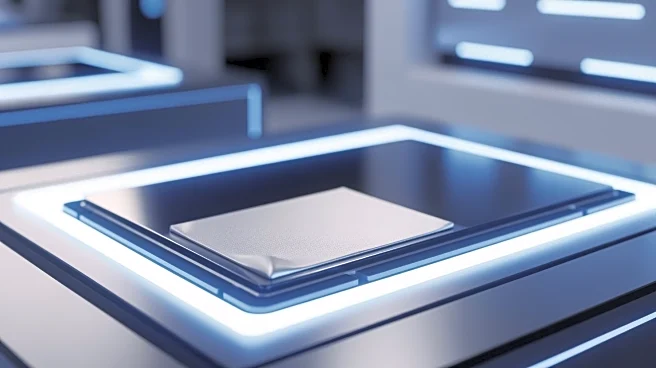
Council Fund. The funds will be used to expand production capacity and advance UniverCell's proprietary dry-coating process for battery electrodes. This process eliminates the need for solvent-based slurries, reducing energy consumption by 30-40% and shrinking factory footprints by up to 60%. The company focuses on producing high-performance batteries for specialized markets such as satellites, medical devices, and space systems, where precision and supply-chain certainty are prioritized over cost per kilowatt-hour.
Why It's Important?
The investment in UniverCell highlights a strategic move to bolster Europe's battery manufacturing capabilities amid global competition, particularly from China, which dominates the battery market. By focusing on a dry-coating process, UniverCell aims to enhance battery performance, cost efficiency, and sustainability, aligning with rising regulatory and environmental standards. This development is crucial for Europe as it seeks to establish a more independent and resilient supply chain for high-performance applications. The funding also reflects a broader trend of investing in deep-tech and climate-tech sectors, which are seen as vital for future economic growth and technological sovereignty.
What's Next?
With the new funding, UniverCell plans to scale its production beyond 1.5 gigawatt-hours and further develop its in-house capabilities, including electrode production and cell assembly. The company aims to position itself as a leader in the European battery sector, focusing on niche markets where Asian supply chains are less competitive. The success of this strategy will depend on UniverCell's ability to maintain its technological edge and meet the growing demand for specialized batteries. The outcome of this investment could influence future funding and development strategies within the European battery industry.