






What's Happening?
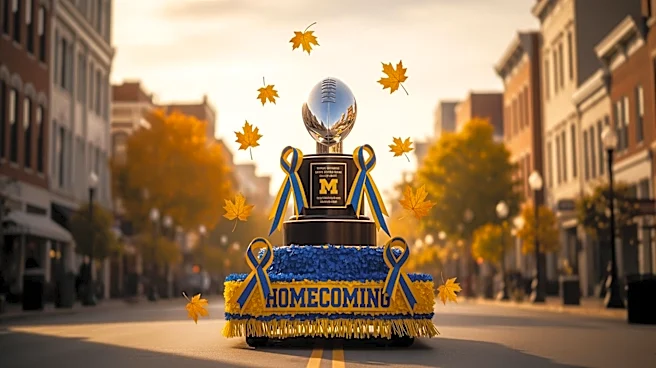
The University of Michigan men's basketball team celebrated their victory in the 2026 NCAA national championship with a parade on campus. The parade commenced at 10 a.m. from the President's House, proceeded down State Street, and concluded at Yost Ice
Arena. Fans were encouraged to line up along South University Drive and State Street to witness the event. The city of Ann Arbor implemented street closures along the parade route starting at 8 a.m. Following the parade, a celebration hosted by the Champions Circle took place at 1 p.m. at Crisler Center. Michigan secured the championship by defeating UConn 69-63, marking their second NCAA title in school history and the first since 1989.
Why It's Important?
The victory and subsequent celebration underscore the significance of collegiate sports in fostering community spirit and pride. The parade and celebration not only honor the team's achievement but also serve as a rallying point for students, alumni, and local residents. The event highlights the role of sports in enhancing the university's reputation and attracting future talent. Additionally, the proceeds from the celebration at Crisler Center, which benefit Michigan's student-athletes, emphasize the importance of supporting athletic programs and their participants. This victory may also boost the university's visibility and influence in collegiate sports.
What's Next?
The University of Michigan will likely continue to leverage this victory to enhance its athletic programs and recruit top-tier talent. The success may lead to increased funding and sponsorship opportunities for the basketball team and other sports programs. The university community can expect further celebrations and events to commemorate the achievement. Additionally, the team will prepare for the next season, aiming to build on their success and maintain their competitive edge in NCAA basketball.
Beyond the Headlines
The celebration of Michigan's victory highlights the cultural and social impact of sports within educational institutions. It reflects the broader societal value placed on athletic achievements and their role in shaping community identity. The event also raises questions about the balance between sports and academics in universities, as well as the financial implications of hosting large-scale celebrations. The focus on student-athlete benefits underscores ongoing discussions about the support and recognition of athletes in collegiate sports.