






What's Happening?
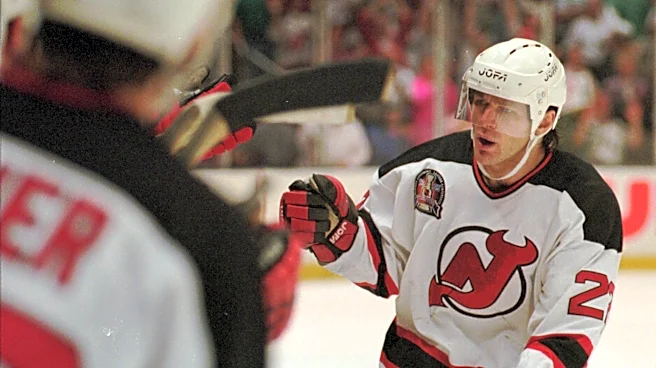
The NHL community is mourning the loss of Claude Lemieux, a former forward who passed away at the age of 60. Lemieux, known for his aggressive playing style, had a successful career spanning 21 seasons with teams like the Montreal Canadiens, New Jersey
Devils, and Colorado Avalanche. He won four Stanley Cups, including two with the Devils. Lemieux's death was reported as a suicide, discovered at a family business in Florida. His passing has prompted tributes from across the NHL, highlighting his impact on the sport.
Why It's Important?
Lemieux's death is a significant loss for the NHL, given his contributions to the sport and his role in winning multiple Stanley Cups. His aggressive style and clutch performances in critical games made him a memorable figure in hockey history. The incident also brings attention to mental health issues within the sports community, emphasizing the need for support systems for athletes. The NHL and its teams are likely to reflect on how they can better support players' mental well-being.
What's Next?
In the wake of Lemieux's passing, the NHL and its teams may increase efforts to address mental health awareness and support for current and former players. The Lemieux family has decided to donate his brain to Boston University's CTE Center, which could provide insights into the long-term effects of head injuries in hockey. This decision may influence future research and policies regarding player safety and health in the NHL.
Beyond the Headlines
Lemieux's death highlights the ongoing conversation about mental health in professional sports. The decision to donate his brain for CTE research underscores the potential link between contact sports and neurological conditions. This could lead to increased advocacy for player safety measures and mental health resources, potentially reshaping how the NHL and other leagues approach these issues.