




What's Happening?
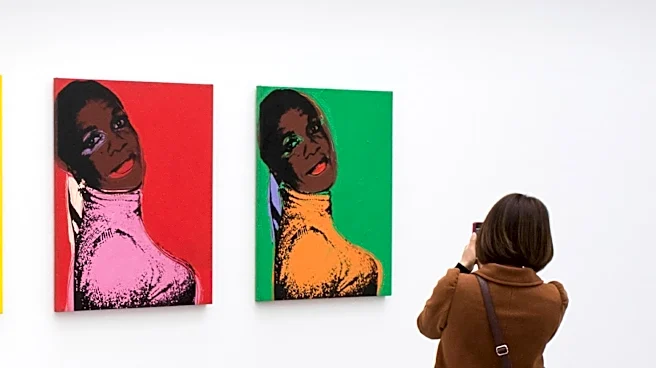
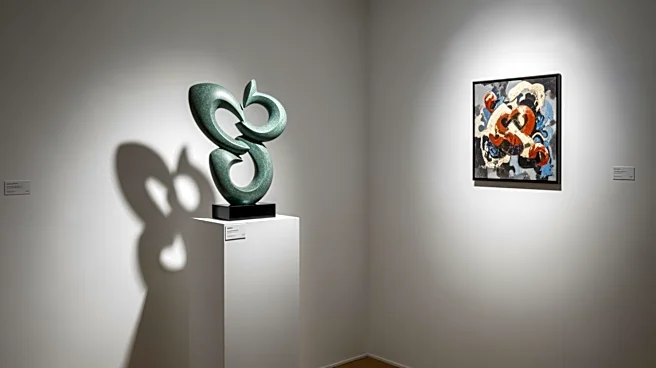
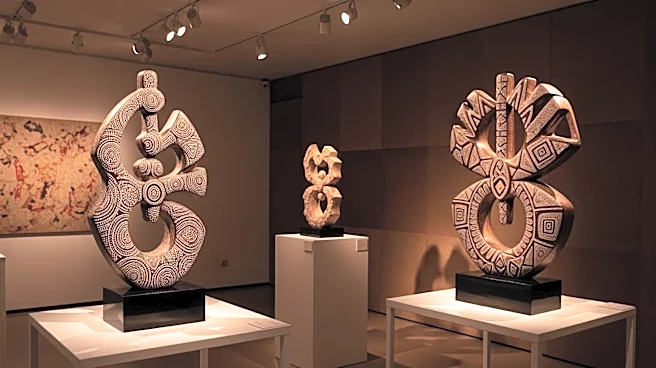
The Frieze New York art fair, held at the Shed, is showcasing a wide array of artworks, including high-value 'blue-chip' pieces. The event, owned by Ari Emanuel, features a mix of established and emerging artists, with a focus on semi-figurative and semi-abstract
paintings. The fair is part of a larger art week in New York, which includes other fairs like TEFAF, Independent, and NADA. Despite the presence of high-profile galleries like David Zwirner and Gagosian, the fair reflects a cautious approach to art sales, with many galleries opting for safe, sellable works. The event highlights the tension between catering to current market trends and pushing the boundaries of contemporary art.
Why It's Important?
Frieze New York is a significant event in the art world, attracting collectors, curators, and art enthusiasts. It serves as a barometer for the current state of the art market, which is still recovering from recent economic challenges. The fair's focus on blue-chip art underscores the importance of financial stability for galleries, especially in a competitive market. However, it also raises questions about the role of art fairs in promoting innovation and diversity in art. The event provides a platform for smaller galleries to gain exposure and compete with larger, established players, highlighting the dynamic nature of the art industry.
Beyond the Headlines
The Frieze New York art fair also reflects broader cultural and economic trends. The emphasis on safe, market-friendly art may indicate a conservative shift in the art world, influenced by economic uncertainties and changing collector preferences. This trend could impact the types of art that are produced and valued, potentially stifling creativity and experimentation. Additionally, the fair's focus on high-value art raises ethical questions about accessibility and the commercialization of art. As the art market continues to evolve, events like Frieze will play a crucial role in shaping its future direction.