


What's Happening?
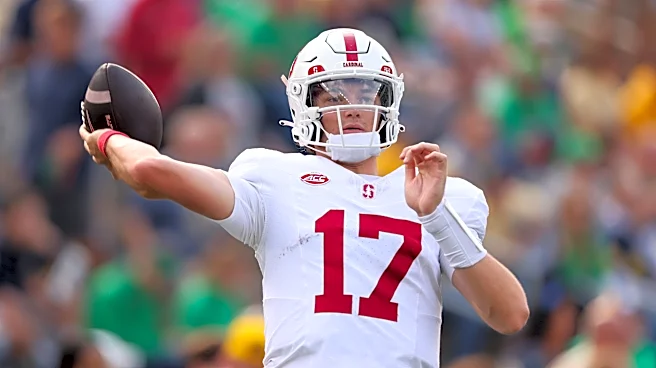
USC freshman linebacker Talanoa Ili and Stanford quarterback Charlie Mirer have filed a class-action lawsuit against the NCAA, Power Four conferences, and the College Sports Commission. The lawsuit alleges that the current Name, Image, and Likeness (NIL)
compensation system suppresses athletes' earnings below competitive levels. The plaintiffs argue that the policies violate California state laws and federal antitrust statutes by restricting NIL rights. The lawsuit seeks monetary damages and an injunction to alter the enforcement structure for NIL deals. The NIL Go clearinghouse, intended to streamline NIL deals, has reportedly rejected or delayed over $125 million in athlete compensation.
Why It's Important?
This lawsuit could significantly impact the future of college athletics and NIL compensation. If successful, it may lead to increased earnings for college athletes and a reevaluation of the current NIL system. The case highlights ongoing tensions between athletes seeking fair compensation and the regulatory bodies governing college sports. The outcome could influence legislation, as U.S. senators are considering a bill to stabilize college athletics and codify some of the current policies into federal law. The lawsuit underscores the broader debate over athletes' rights and the commercialization of college sports.
What's Next?
The legal proceedings will likely draw attention from various stakeholders, including universities, athletes, and lawmakers. A hearing is scheduled where plaintiff attorney Jeffrey Kessler will argue against the current criteria for NIL deals. Additionally, legislative efforts, such as the Protect College Sports Act, may gain momentum as lawmakers seek to address the issues raised by the lawsuit. The outcome of this case could set a precedent for future NIL-related legal challenges and influence the regulatory landscape of college sports.