






What's Happening?
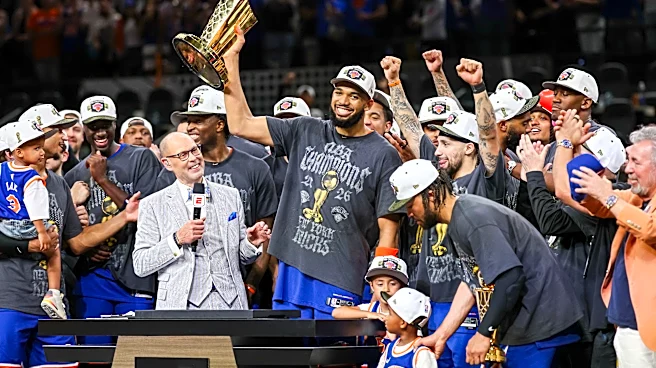
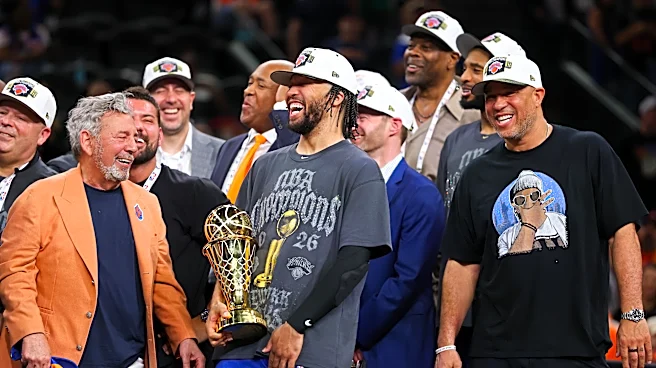
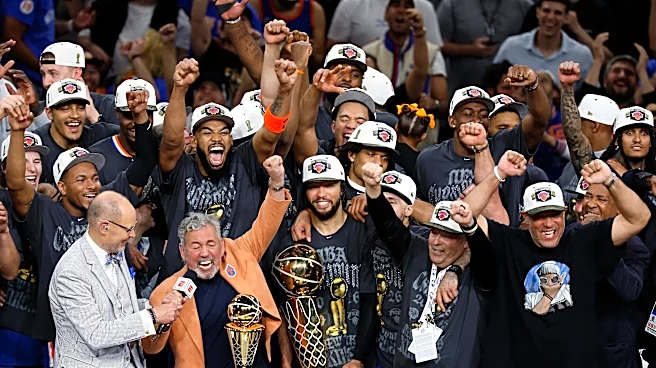
Jalen Brunson, a key player for the New York Knicks, has led the team to an NBA championship victory against the San Antonio Spurs, securing the Finals MVP title. Brunson's significant contribution to the Knicks' success began in 2024 when he opted to leave
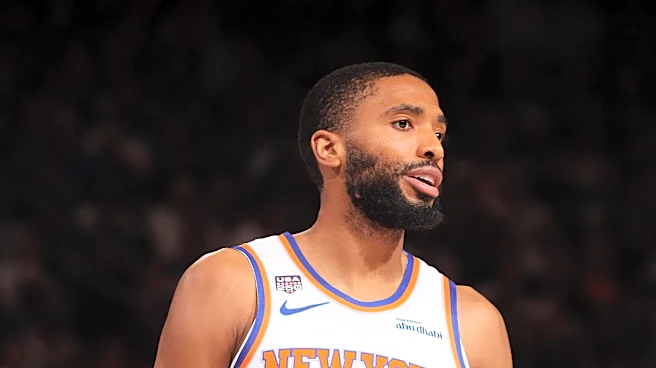
$113 million on the table, allowing the team financial flexibility to build a championship roster. This strategic decision enabled the Knicks to acquire key players like Mikal Bridges and Karl-Anthony Towns. Brunson's performance in the finals was pivotal, scoring 45 points in the title-clinching game. His father, Rick Brunson, a former Knicks player and current assistant coach, celebrated the victory alongside him.
Why It's Important?
Brunson's decision to prioritize team success over personal financial gain has set a precedent in the NBA, highlighting the impact of strategic financial sacrifices on team building. His actions have not only brought the Knicks their first championship in over 50 years but have also elevated his status among New York sports legends. This victory underscores the importance of player decisions in shaping team dynamics and success. Brunson's leadership and performance have revitalized the Knicks, transforming them from a struggling franchise to a championship team, and have positioned him as a top contender in the league.
What's Next?
Following this championship win, the Knicks are likely to continue building on their success, leveraging the momentum gained from this victory. Brunson's future contract negotiations will be closely watched, as he is expected to secure a lucrative extension that could exceed $300 million. The team's management will aim to maintain the current roster's strength while exploring opportunities to further enhance their competitiveness. The Knicks' success may also influence other players and teams to consider similar strategic financial decisions to achieve long-term success.
Beyond the Headlines
Brunson's story highlights the evolving nature of player contracts and team-building strategies in professional sports. His willingness to take a financial hit for the greater good of the team challenges traditional notions of player compensation and could inspire a shift in how athletes approach contract negotiations. This development also raises questions about the balance between individual financial security and collective team success, potentially influencing future negotiations across the league.