
What's Happening?
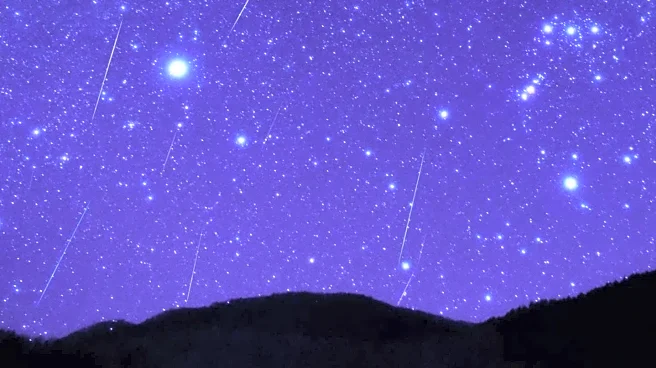
The Ursid meteor shower, often overshadowed by the Geminids, is set to peak during the overnight hours of December 21-22. Originating from the constellation Ursa Minor, the Ursids are expected to produce
medium-speed meteors at a rate of 5-10 per hour. The shower's visibility is enhanced this year due to the new moon on December 19, which will provide dark skies for optimal viewing. Historically, the Ursids have produced notable outbursts, although no unusually strong activity is forecasted for 2025. However, some experts suggest a potential encounter with a dense filament of meteoric material, which could increase activity.
Why It's Important?
The Ursid meteor shower offers a unique opportunity for skywatchers to observe a lesser-known celestial event. With the new moon providing ideal conditions, this year's Ursids could surprise observers with increased activity. The event highlights the dynamic nature of meteor showers and their potential to vary in intensity. For astronomy enthusiasts and the general public, the Ursids provide a chance to engage with the night sky and appreciate the natural phenomena that occur beyond our planet.
What's Next?
Skywatchers are encouraged to observe the Ursids during the early morning hours of December 22, when the radiant is highest in the sky. While no significant outbursts are predicted, the possibility of increased activity due to a dense meteoric filament adds an element of anticipation. Observers should find a location with minimal light pollution to maximize their viewing experience. The Ursids serve as a reminder of the unpredictable nature of meteor showers and the ongoing need for observation and study to better understand these events.