
What's Happening?
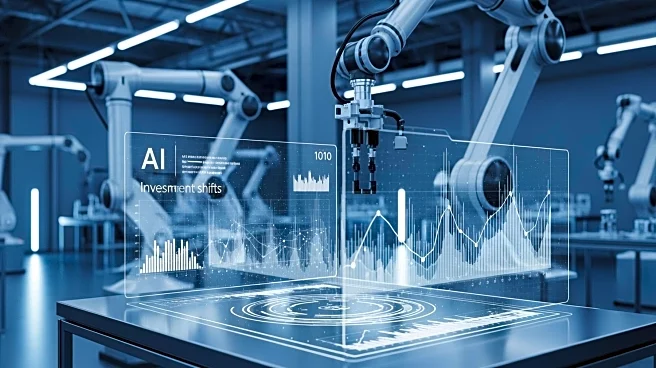
Mind Robotics has raised $500 million in a Series A funding round co-led by Accel and Andreessen Horowitz. The company aims to develop and deploy AI-enabled robotic systems for industrial applications. This funding follows a previous seed round of $115
million led by Eclipse Capital. Mind Robotics, founded by Rivian CEO RJ Scaringe, seeks to address limitations in current industrial automation by creating robots capable of performing complex, dexterous tasks. The company benefits from Rivian's engineering expertise and production data, providing a robust environment for developing and testing its robotic systems. The funding will support the expansion of Mind Robotics' platform, which aims to enhance global competitiveness and address industrial labor shortages.
Why It's Important?
The significant investment in Mind Robotics highlights the growing interest in AI-driven industrial automation. As industries face labor shortages and seek to improve efficiency, advanced robotics offer a solution by performing tasks that require human-like dexterity and reasoning. The involvement of prominent investors like Accel and Andreessen Horowitz underscores the potential of Mind Robotics to lead in this technological shift. The development of AI-powered robots could transform manufacturing processes, reduce costs, and increase productivity, providing a competitive edge to companies that adopt these technologies. This advancement also aligns with broader trends towards automation and digital transformation in the industrial sector.
What's Next?
With the new funding, Mind Robotics will focus on scaling its operations and refining its robotic systems for real-world deployment. The company will likely continue leveraging Rivian's resources to enhance its technology and expand its market presence. As the industrial sector increasingly adopts AI and robotics, Mind Robotics may explore partnerships with other manufacturers to integrate its solutions into various production environments. The success of this initiative could pave the way for further investments in AI-driven automation, potentially leading to new innovations and applications across different industries.