






What's Happening?
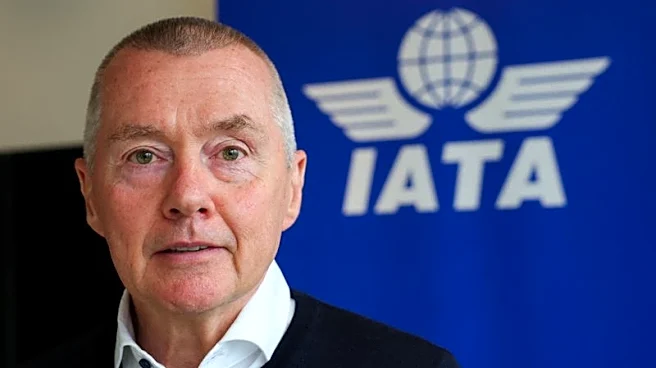
United Airlines CEO Scott Kirby has stated that he does not foresee further airline consolidation in the U.S. following American Airlines' rejection of a potential merger earlier this year. Speaking at the International Air Transport Association's annual
meeting, Kirby emphasized that United Airlines is not interested in pursuing a merger just for the sake of it. He noted that the U.S. domestic air travel market is mature, and future growth lies in international travel. Kirby also mentioned that United has no plans to merge with JetBlue Airways, despite their partnership. Delta Air Lines President Peter Carter echoed similar sentiments, indicating that Delta's strategy focuses on partnerships and joint ventures rather than mergers.
Why It's Important?
The statements by United Airlines' CEO highlight a potential shift in the airline industry's approach to growth, focusing more on international expansion rather than domestic consolidation. This could impact the competitive landscape, particularly in the trans-Pacific market, where Delta Air Lines aims to challenge United's position. The lack of further consolidation may also influence regulatory perspectives and investor expectations, as mergers often face significant scrutiny. Airlines may need to explore alternative strategies, such as enhancing partnerships and improving operational efficiencies, to remain competitive in a saturated domestic market.
What's Next?
With the focus shifting towards international markets, airlines like United and Delta may increase investments in expanding their global routes, particularly in lucrative regions like the Asia-Pacific. This could lead to intensified competition among major carriers for market share in these regions. Additionally, airlines may seek to strengthen alliances and joint ventures to enhance their global reach and service offerings. Regulatory bodies will likely continue to monitor the industry for any potential anti-competitive practices, especially if new merger proposals arise.