



What's Happening?
Outpost, a company specializing in the ownership, operation, and automation of truck terminals, has expanded its network by acquiring five new properties across the United States. These properties are located in Newark, New Jersey; Miami, Florida; Stockton,
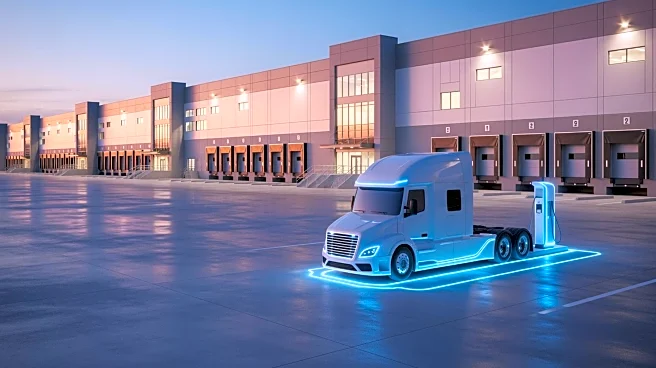
California; Livermore, California; and Torrance, California. The expansion adds over 30 acres to Outpost's national truck terminal network. In addition to these acquisitions, Outpost has made a strategic investment in EV Realty, incorporating three EV-ready properties in California to facilitate near-term fleet electrification. This move is aimed at enhancing trucking access to key ports, airports, and highways, thereby supporting the logistics infrastructure. The properties are strategically positioned to serve high-volume markets, providing essential logistics infrastructure and preparing for future electrification needs.
Why It's Important?
The expansion of Outpost's truck terminal network is significant for the logistics and transportation industry, particularly as it aligns with the growing trend towards electrification of fleets. By integrating EV-ready infrastructure, Outpost is positioning itself to meet the increasing demand for sustainable transportation solutions. This development is crucial for reducing carbon emissions in the logistics sector, which is a major contributor to environmental pollution. The strategic locations of these properties enhance the efficiency of freight movement, potentially reducing transportation costs and improving supply chain reliability. Stakeholders in the logistics and transportation industries stand to benefit from improved infrastructure and the transition to electric vehicles, which could lead to long-term cost savings and compliance with environmental regulations.
What's Next?
As Outpost continues to develop its EV-ready properties, the focus will likely be on building high-power charging hubs to support the electrification of fleets. This infrastructure development is expected to attract more logistics companies looking to transition to electric vehicles. The collaboration with EV Realty suggests a commitment to expanding the availability of grid-ready properties, which could accelerate the adoption of electric vehicles in the logistics sector. Stakeholders, including logistics companies and environmental groups, may closely monitor the progress of these developments, as they could set a precedent for future infrastructure investments in the industry.