






What's Happening?
The Cleveland Browns are adjusting their defensive strategy to address the increasing use of tight ends in the NFL. Under new defensive coordinator Mike Rutenberg, the Browns plan to utilize three safeties consistently, a shift influenced by the success
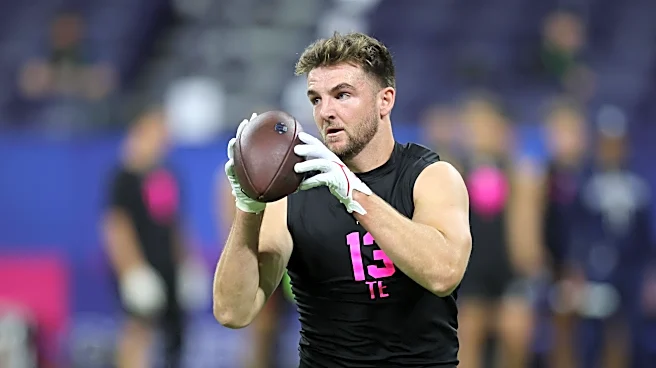
of the Los Angeles Rams' 13 personnel strategy. This approach, which includes one running back and three tight ends, has challenged defenses by exploiting mismatches in size and alignment. The Browns' decision to draft safety Emmanuel McNeil-Warren reflects their commitment to this new defensive scheme, aiming to counteract the offensive advantages gained by teams like the Rams.
Why It's Important?
The Browns' strategic shift highlights a broader trend in the NFL, where teams are increasingly valuing tight ends for their versatility and ability to create mismatches. By focusing on a three-safety defense, the Browns aim to enhance their ability to defend against these formations, potentially setting a precedent for other teams facing similar challenges. This adaptation could influence future draft strategies and player development, as teams seek to balance offensive innovation with defensive resilience.
What's Next?
As the Browns implement their new defensive strategy, the effectiveness of their approach will be closely monitored. Success could lead to further adoption of similar tactics across the league, while challenges may prompt additional adjustments. The performance of players like McNeil-Warren will be critical in determining the viability of this strategy. Additionally, the Browns' ability to secure key defensive players through contracts and drafts will play a significant role in their long-term success.