
What's Happening?
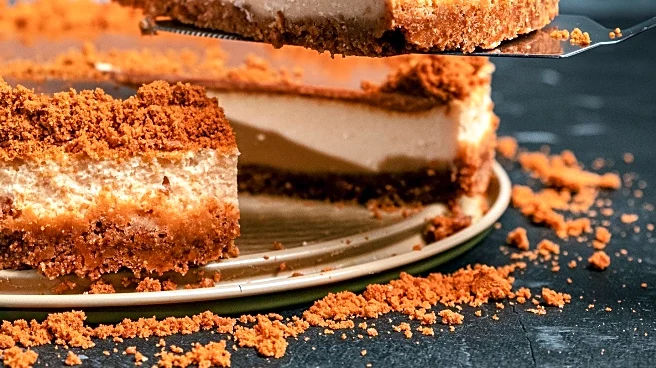
A new social media trend involving a two-ingredient dessert known as the 'Biscoff cheesecake' has gained popularity. The dessert, which combines Greek yogurt and Biscoff cookies, is touted as a high-protein,
no-bake treat. Despite its simplicity and the hype surrounding it, food reporter Emily Heil found the dessert lacking in taste and texture. The preparation involves pressing cookies into a tub of yogurt and refrigerating it overnight. While the combination of yogurt and cookies is appealing in theory, the result is a mushy texture that fails to replicate the richness of a traditional cheesecake. Variations using different cookies, such as Oreos and shortbread, were also tested but did not improve the outcome.
Why It's Important?
The trend highlights the influence of social media on food culture and consumer behavior. As people seek healthier alternatives to traditional desserts, the Biscoff 'cheesecake' represents a broader movement towards protein-rich, low-calorie options. However, the trend also underscores the potential disconnect between online hype and actual culinary satisfaction. The popularity of such trends can drive consumer interest and sales for specific products, like Greek yogurt and Biscoff cookies, impacting market dynamics. Additionally, it reflects the ongoing dialogue around diet culture and the pursuit of guilt-free indulgence.
What's Next?
As the trend evolves, enthusiasts may continue experimenting with the recipe to enhance its flavor and texture. This could lead to new variations that incorporate additional ingredients or techniques to achieve a more satisfying dessert. The trend's trajectory will likely depend on continued social media engagement and the creativity of its followers. Food brands may capitalize on the trend by marketing products that align with the demand for healthier dessert options.
Beyond the Headlines
The Biscoff 'cheesecake' trend raises questions about the role of social media in shaping food preferences and the impact of diet culture on consumer choices. It highlights the tension between the desire for indulgence and the pursuit of health-conscious alternatives. As consumers navigate these trends, they may become more discerning about the balance between taste and nutritional value, influencing future food innovations.