






What's Happening?
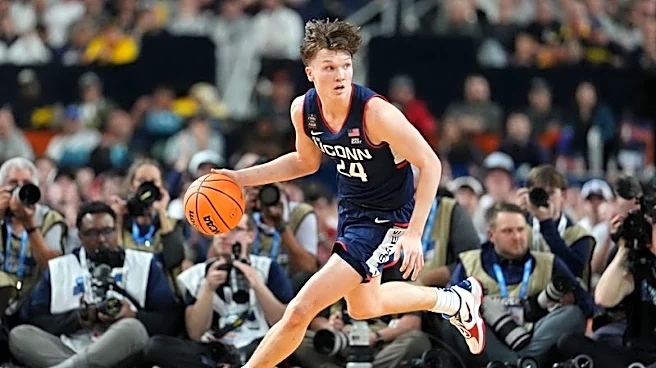
Braylon Mullins, a freshman at the University of Connecticut and a projected first-round NBA draft pick, has decided to delay his entry into the NBA to return for his sophomore season. This decision was announced by his father and reflects Mullins' choice
to prioritize further development over an early professional career. Mullins, who was a five-star recruit and participated in the McDonald’s All-American Game, has been recognized for his size, athleticism, and scoring ability, which placed him at No. 17 on ESPN's draft board. By returning to UConn, Mullins aims to refine his skills and potentially improve his draft position for the 2027 NBA draft. This move aligns with a trend among top prospects who see value in additional college experience, especially within a program like UConn that is known for preparing players for professional success.
Why It's Important?
Mullins' decision to stay at UConn for another year is significant for both his personal development and the university's basketball program. For UConn, retaining a player of Mullins' caliber strengthens their team, providing continuity and leadership as they aim to maintain their status among the top college basketball programs. For Mullins, the additional year offers a chance to enhance his skills, particularly in areas like defense and playmaking, which could elevate his draft stock. This decision also impacts the NBA draft landscape, as Mullins' presence in the 2027 draft could shift team strategies and player evaluations. His choice underscores a growing recognition among young athletes of the benefits of college development over immediate professional entry.
What's Next?
As Mullins prepares for his sophomore season, he is expected to take on a more prominent role within the UConn team, potentially becoming a key offensive player and leader. His performance in the upcoming season will be closely watched by NBA scouts, as consistent production and growth in his game could significantly boost his draft prospects. For UConn, Mullins' return is a strategic advantage, allowing them to build a team around his talents and aim for high achievements in college basketball. The decision also sets a precedent for other young athletes considering the timing of their professional careers, potentially influencing future draft classes.