








What's Happening?
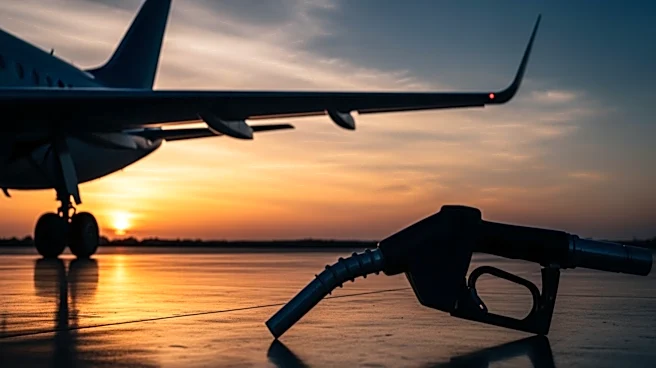
The aviation industry is grappling with a severe crisis due to a global fuel shortage exacerbated by geopolitical conflicts, particularly the 2026 Iran war. The closure of the Strait of Hormuz, a critical chokepoint for global oil and gas supply, has
led to a significant disruption in the availability of refined jet fuel. This has resulted in skyrocketing fuel prices, with jet fuel costs nearly doubling from $2.50 to $4.90 per gallon. Major airlines are facing increased operational costs, leading to higher ticket prices and potential route cancellations. The crisis has also exposed the limitations of traditional fuel hedging strategies, leaving airlines vulnerable to financial losses.
Why It's Important?
The fuel crisis has profound implications for the aviation industry and global travel. Airlines are forced to increase ticket prices, which could reduce demand and impact the travel industry. The crisis highlights the vulnerability of the aviation sector to geopolitical events and the need for alternative energy sources. The financial strain on airlines could lead to industry consolidation, with smaller carriers at risk of bankruptcy. The situation underscores the importance of energy security and may accelerate the adoption of sustainable aviation fuels and alternative propulsion technologies.
What's Next?
Airlines are likely to continue adjusting their operations, including reducing capacity and consolidating routes, to manage costs. The industry will closely monitor geopolitical developments, particularly the situation in the Middle East, which could influence fuel availability. There may be increased pressure on governments and industry stakeholders to invest in alternative energy solutions to mitigate future risks. The coming months will be critical in determining the long-term impact on the aviation industry and global travel patterns.