
What's Happening?
At the New York Auto Show, Hyundai announced a strategic shift in its vehicle offerings, emphasizing a focus on the US market, which is its largest. CEO Jose Munos revealed plans to invest $26 billion in the US, including building a steel plant and achieving
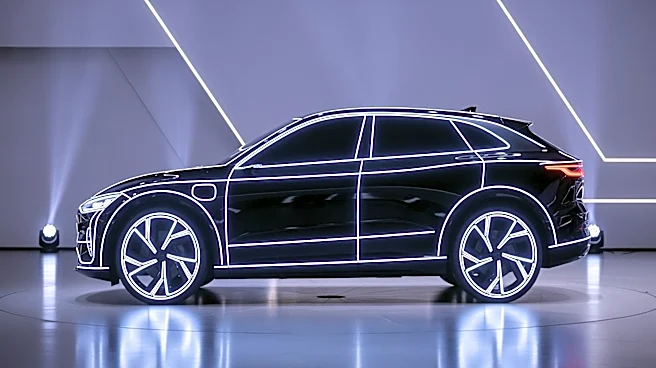
80% localization. Hyundai is scaling back its battery electric vehicle (BEV) plans, opting instead to introduce more hybrid models. The IONIQ 6 N will continue to be offered, but the regular IONIQ 6 has been discontinued. Hyundai is also introducing body-on-frame SUVs and pickups, with the Boulder SUV concept unveiled at the show. Despite this shift, Hyundai's Kia brand introduced the EV3 prototype, a compact electric vehicle expected to start production in Mexico later this year.
Why It's Important?
Hyundai's strategic shift away from EVs towards hybrid and internal combustion engine vehicles reflects a significant change in its approach to the US market. This move could impact the broader automotive industry, particularly as the US market is a major player in global automotive trends. The decision to focus on hybrids and ICE vehicles may be seen as a response to current market demands and regulatory environments. However, it also raises questions about the future of electrification in the US, especially as other markets continue to push for more sustainable transportation solutions. Hyundai's investment in the US could bolster local economies and create jobs, but it may also slow the transition to electric vehicles.
What's Next?
Hyundai's partnership with General Motors, established in 2024, could play a crucial role in its future strategy. The collaboration aims to co-develop vehicles, including midsized pickups and compact cars, potentially increasing scale and part-sharing capabilities. This partnership may help Hyundai and GM maintain competitiveness in the evolving automotive landscape. As Hyundai continues to invest in the US, it will be important to monitor how these developments affect its market position and influence the broader industry. The company's focus on hybrid and ICE vehicles may also prompt reactions from environmental groups and policymakers advocating for cleaner transportation solutions.