


What's Happening?
Minke Marine A.L. LLC, a maritime innovation company based on the U.S. West Coast, has received its second Approval in Principle (AiP) from ClassNK for its new air lubrication system (ALS). This follows a previous AiP from DNV, marking a significant step
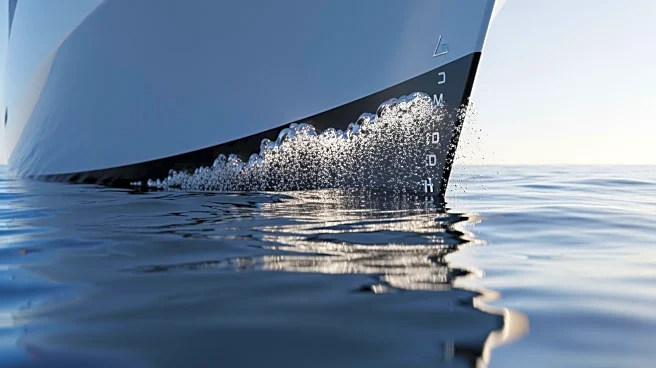
in the company's efforts to revolutionize the ALS sector. The Minke ALS is designed to reduce emissions and fuel consumption by creating a layer of air beneath a vessel, without relying on compressors or blowers. This system is noted for its simplicity and cost-effectiveness, with installation costs ranging from $475,000 to $750,000 depending on the vessel size. The system has been installed on a 55,000 DWT Norwegian-owned cargo vessel, with initial data indicating substantial fuel savings. Full results are expected in March 2026.
Why It's Important?
The approval of Minke Marine's ALS by ClassNK highlights a growing trend towards more sustainable maritime operations. As the shipping industry faces increasing pressure to reduce emissions, technologies like the Minke ALS offer a viable solution. The system's affordability and efficiency could make it an attractive option for ship owners and operators looking to comply with environmental regulations such as the IMO Net-Zero Framework and the EU's Emissions Trading System. By providing a cost-effective means to cut emissions, Minke Marine's technology could play a crucial role in the industry's transition to greener practices, potentially influencing policy and investment decisions in the maritime sector.
What's Next?
Minke Marine plans to release comprehensive data on the performance of its ALS in March 2026, which could further validate its effectiveness and spur wider adoption. The company is positioning its system as a solution for both retrofits and new builds, with a return on investment projected within nine to 24 months. As regulatory pressures mount, the maritime industry may increasingly turn to such technologies to meet compliance requirements. Stakeholders, including ship owners, operators, and regulatory bodies, will likely monitor these developments closely, potentially leading to broader implementation of air lubrication systems across the industry.