







What's Happening?
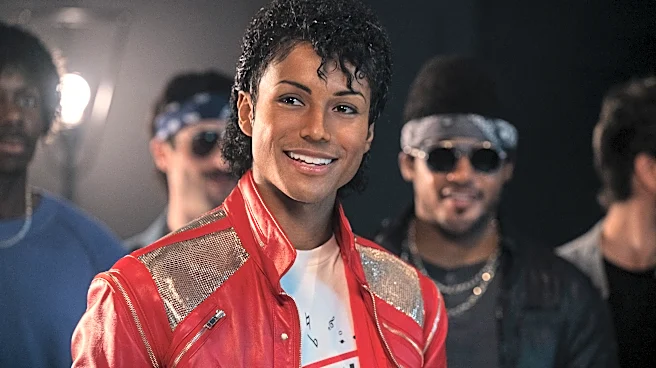
The new biopic 'Michael,' directed by Antoine Fuqua and produced by Graham King, attempts to explore the life of Michael Jackson but has faced criticism for its portrayal and omissions. The film covers Jackson's rise from a child star in the Jackson 5
to his solo career, highlighting his musical genius and personal eccentricities. However, it stops short of addressing the sexual abuse allegations that surfaced in 1993, which Jackson disputed and settled out of court. The filmmakers initially intended to include these events but were restricted by a settlement agreement that prohibited depiction for commercial purposes. This has led to an abrupt ending of the film, which concludes with Jackson's 1988 tour for his album 'Bad.'
Why It's Important?
The film's handling of Michael Jackson's life story is significant as it reflects ongoing debates about how to address the legacies of public figures with controversial pasts. The omission of the abuse allegations highlights the challenges filmmakers face in balancing artistic expression with legal and ethical considerations. The biopic's release also coincides with broader societal discussions about accountability and the power dynamics that can protect influential individuals from scrutiny. The film's reception and the decisions made in its production could influence future portrayals of complex historical figures in media.
What's Next?
The filmmakers have hinted at potential sequels that may address the later years of Jackson's life, including the controversies that were omitted from the current film. The reception of 'Michael' could impact these plans, as well as the ongoing public discourse about Jackson's legacy. Additionally, the film's performance at the box office and its influence on Jackson's posthumous image could affect future projects related to his life and career.
Beyond the Headlines
The biopic's narrative choices underscore the tension between storytelling and historical accuracy in biographical films. The decision to exclude certain aspects of Jackson's life raises questions about the role of filmmakers in shaping public memory and the ethical implications of omitting significant events. This case also highlights the influence of legal agreements on creative works and the potential for such constraints to alter the portrayal of historical figures.