







What's Happening?
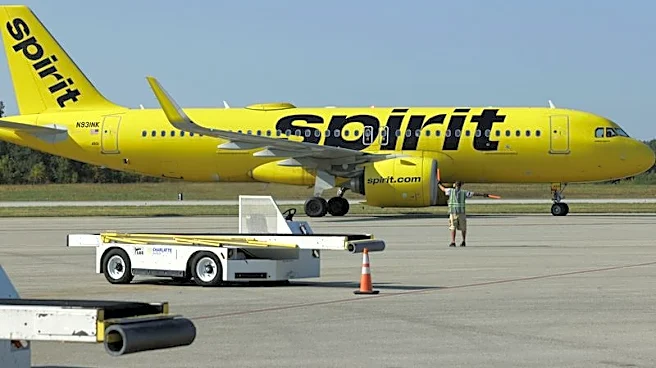
Spirit Airlines has announced the termination of its seasonal flight route between Atlantic City and Myrtle Beach, effective May 3, 2026. This decision comes shortly after the route was resumed, indicating potential financial challenges for the airline.
The move is part of broader discussions regarding a bailout, as Spirit Airlines seeks to stabilize its operations amid rising costs and competitive pressures. The cancellation of this route affects travelers who rely on Spirit for affordable travel options between these destinations.
Why It's Important?
The cessation of flights between Atlantic City and Myrtle Beach could impact local economies, particularly in tourism-dependent areas. Atlantic City, known for its casinos and beaches, may see reduced visitor numbers, affecting hospitality and service industries. Myrtle Beach, a popular vacation spot, might experience similar economic effects. Spirit Airlines' financial struggles highlight broader challenges in the airline industry, including rising operational costs and the need for strategic financial management. The situation underscores the importance of maintaining competitive pricing and service offerings to attract and retain customers.
What's Next?
Spirit Airlines will continue bailout discussions, which may involve seeking financial assistance or restructuring its operations to improve profitability. The airline might explore alternative routes or partnerships to enhance its service network. Local businesses in Atlantic City and Myrtle Beach may need to adjust their marketing strategies to attract visitors through other travel options. The outcome of bailout talks could influence Spirit's future operational decisions and its ability to compete in the airline market.
Beyond the Headlines
The airline's decision reflects broader industry trends, including the impact of economic fluctuations on travel demand and airline profitability. It raises questions about the sustainability of low-cost carriers in a competitive market and the need for innovation in service delivery. The situation may prompt discussions on the role of government support in stabilizing essential transportation services.