







What's Happening?
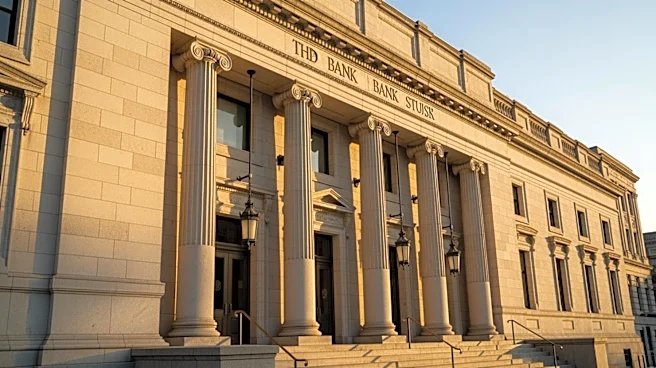
Haxel Law, a local law firm in Springfield, Illinois, is expanding its operations and planning a move into a historic bank building. According to Michelle Ownbey, executive editor of the Springfield Business Journal, the firm has recently expanded into a space
vacated by the Keep Store and added two new attorneys to its team. The firm, owned by Martin and Laurie Haxel, controls several properties in the 300 block of Adams Street. They have been working on renovating a former bank building at the corner of Fourth and Adams, a project supported by TIF money approved by the city council. The renovation, estimated at $3 million, has faced delays, but plans are in place to rent out the first floor and relocate the firm's offices to the second floor. Additionally, the Illinois State Police Heritage Foundation is set to move into another former bank space previously used by Springfield Clinic as a COVID-19 test station.
Why It's Important?
The expansion and relocation of Haxel Law signify a revitalization effort in downtown Springfield, potentially boosting the local economy and property values. By occupying a long-vacant building, the firm contributes to urban renewal and the efficient use of existing infrastructure. The move also highlights the importance of TIF funding in supporting local businesses and development projects. The presence of the Illinois State Police Heritage Foundation in another former bank building further underscores the trend of repurposing old structures for new uses, which can lead to increased foot traffic and economic activity in the area. These developments may encourage other businesses to invest in the downtown district, fostering a more vibrant community.
What's Next?
Haxel Law's move into the renovated bank building is expected to proceed once the first-floor tenant is secured and renovations are completed. The firm's expansion could lead to further hiring and growth opportunities. The Illinois State Police Heritage Foundation's relocation may also prompt additional developments in the area. As these projects progress, local stakeholders, including business owners and city officials, will likely monitor the impact on the downtown economy and community engagement. The success of these initiatives could serve as a model for similar urban renewal efforts in other parts of the city.