



What's Happening?
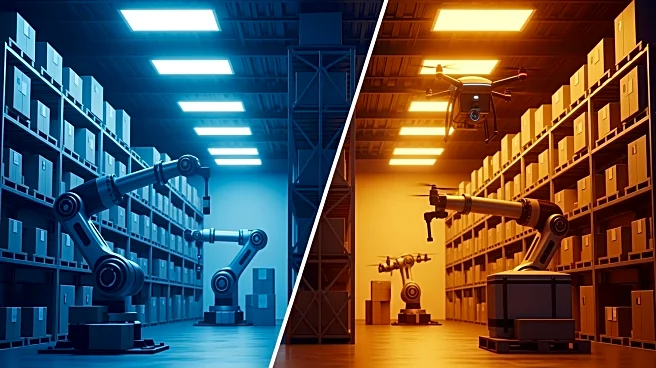
Amazon and Walmart are vying for the top spot in U.S. revenue, with Amazon reporting $716.9 billion in 2025, surpassing Walmart's $713.2 billion. Both companies are adopting distinct AI strategies to enhance their operations. Amazon is focusing on a leaner
workforce, reducing headcount while investing heavily in AI infrastructure, particularly through Amazon Web Services. In contrast, Walmart is emphasizing a 'people-led, tech-powered' approach, investing in employee skills and AI tools to boost productivity. These strategies reflect differing philosophies on integrating AI into business operations, with Amazon prioritizing efficiency and Walmart focusing on employee empowerment.
Why It's Important?
The contrasting AI strategies of Amazon and Walmart highlight the diverse approaches companies can take in leveraging technology for growth. Amazon's focus on efficiency and cost-cutting through AI could lead to significant operational savings, but also raises concerns about workforce reductions. Walmart's investment in employee development and AI integration aims to enhance productivity while maintaining a strong workforce. These strategies could influence how other companies approach AI adoption, impacting employment practices and competitive dynamics in the retail sector. The outcome of this competition may set precedents for AI-driven business models.
What's Next?
As Amazon and Walmart continue to refine their AI strategies, the retail industry will closely watch their outcomes. Amazon's investment in AI infrastructure suggests a long-term commitment to technological advancement, potentially leading to further workforce reductions. Walmart's focus on employee empowerment through AI training and tools may enhance its reputation as a people-centric employer. Both companies are likely to continue exploring AI innovations to maintain their competitive edge. The success of these strategies could influence future AI investments and workforce management practices across the industry.