


What's Happening?
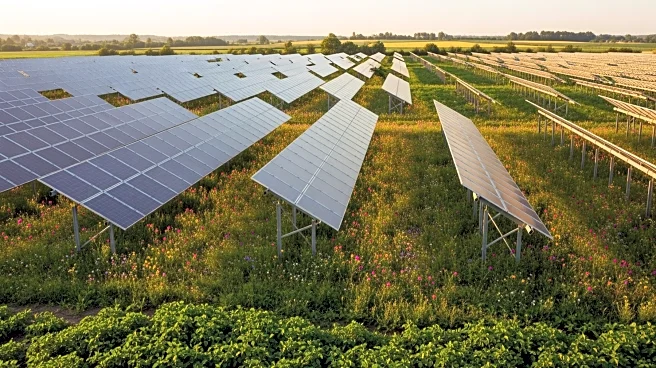
The installation of solar panels on large agricultural farms has led to unexpected environmental benefits, transforming these areas into natural havens for bees and promoting biodiversity. Initially intended to expand clean energy generation, these solar panels have, over five years, created conditions conducive to ecological balance and soil protection. The practice, known as agrophotovoltaics, has been studied since the 1980s but gained traction with technological advancements and cost reductions post-2018. The panels provide partial shade, reducing water evaporation and protecting crops from excessive heat, which has improved soil moisture and thermal stability. This has led to reduced chemical interventions and increased pollinator populations,
particularly bees, enhancing agricultural productivity and natural pest control.
Why It's Important?
The integration of solar panels in agricultural settings demonstrates a successful model of combining renewable energy with traditional farming, offering both environmental and economic benefits. This approach not only supports clean energy goals but also enhances agricultural productivity by improving soil conditions and reducing the need for chemical pesticides. The increase in pollinator populations, such as bees, further boosts crop yields and ecological balance. This model provides farmers with an additional income stream from solar energy production, making it economically viable. The success of agrophotovoltaics could encourage broader adoption, contributing to sustainable agriculture and energy practices.
What's Next?
As the benefits of agrophotovoltaics become more evident, it is likely that more farms will adopt this model, integrating solar panels with agricultural production. The development of taller panels and adjustable modules compatible with agricultural machinery could further enhance the feasibility and efficiency of this approach. Researchers and policymakers may focus on promoting this model to achieve sustainability goals, potentially leading to policy incentives and support for farmers. The continued advancement in solar technology and its integration with agriculture could play a significant role in addressing climate change and food security challenges.