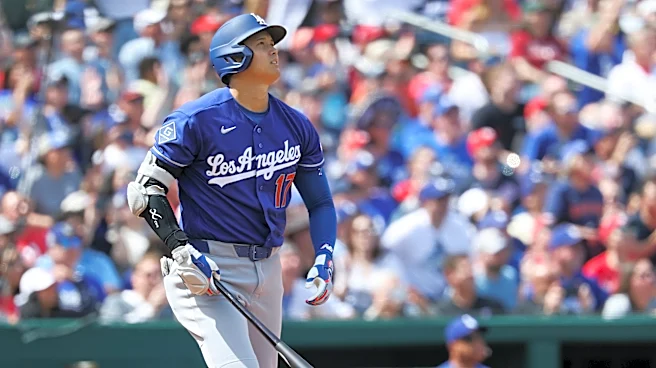








What's Happening?
James Wood, a key player for the Washington Nationals, is experiencing a significant slump at the start of the 2026 season. Despite hopes for a turnaround year, Wood's performance has been disappointing, with a batting average of .125 and 17 strikeouts
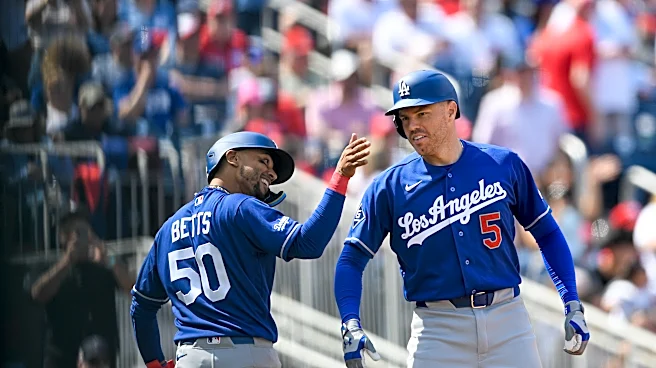
in 40 at-bats. His recent struggles follow a promising 2025 season where he earned All-Star honors and participated in the Home Run Derby. However, Wood's current statistics, including a low chase rate and a 7th percentile whiff rate, indicate ongoing issues with plate discipline. While he managed to hit a three-run home run in a recent game against the Dodgers, his overall performance remains concerning.
Why It's Important?
James Wood's performance is crucial for the Nationals, as he is seen as a cornerstone for the team's future success. His struggles could impact the team's competitiveness in the league, especially given his role as a power hitter. The Nationals rely on Wood to drive offensive production, and his inability to consistently make contact with the ball could hinder their chances of winning games. Additionally, Wood's performance may affect his market value and future contract negotiations, potentially influencing the team's financial decisions. The Nationals need Wood to regain his form to maintain their aspirations for a successful season.
What's Next?
The Nationals may need to focus on improving Wood's plate discipline and consistency to help him overcome his current slump. Coaching staff might work on refining his approach at the plate to reduce strikeouts and increase contact. As the season progresses, Wood's performance will be closely monitored, and adjustments may be necessary to ensure he contributes effectively to the team's success. The Nationals' management may also consider strategic changes if Wood's struggles persist, potentially impacting team dynamics and future roster decisions.
Beyond the Headlines
Wood's situation highlights the challenges young athletes face in maintaining performance levels amidst high expectations. His struggles may reflect broader issues within the Nationals' development system, emphasizing the need for effective player support and training. Additionally, Wood's case underscores the volatility of sports careers, where early success does not guarantee sustained performance. The Nationals' reliance on Wood also illustrates the pressure on individual players to carry team hopes, which can affect their mental and physical well-being.