


What's Happening?
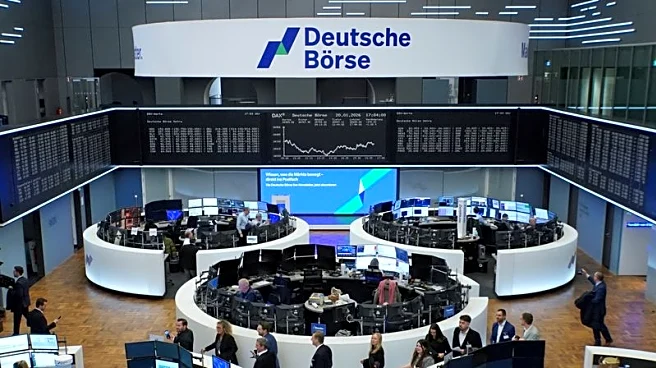
U.S. futures and global shares have experienced a downturn amid concerns over President Donald Trump's nominee for the Federal Reserve chair and potential overvaluation in the artificial intelligence sector. The nomination of Kevin Warsh as the next Fed chair has raised fears about the Fed's independence and its approach to interest rates. Additionally, the AI boom has led to significant market volatility, with tech stocks experiencing sharp declines. These factors have contributed to investor uncertainty and market instability.
Why It's Important?
The Federal Reserve plays a crucial role in shaping U.S. monetary policy, and any perceived threats to its independence can have significant implications for the economy. Concerns about the Fed's direction under Warsh's
leadership could impact interest rates, inflation, and overall economic stability. Meanwhile, the AI sector's rapid growth and potential bubble raise questions about the sustainability of current valuations and the risk of market corrections. These developments highlight the interconnectedness of monetary policy and technological innovation in influencing market dynamics.
What's Next?
The Senate will need to confirm Warsh's nomination, and his potential confirmation could lead to shifts in monetary policy. Investors will closely monitor the Fed's actions and statements for indications of future interest rate decisions. In the tech sector, companies may face increased scrutiny over their valuations and business models, potentially leading to market adjustments. Policymakers and regulators may also consider measures to address systemic risks associated with rapid technological advancements.
Beyond the Headlines
The situation underscores the broader challenges of balancing innovation with economic stability. The AI boom represents a transformative shift in technology, but it also poses risks of market speculation and volatility. The Fed's role in managing these dynamics is critical, and its ability to navigate complex economic landscapes will be closely watched. The developments also highlight the importance of maintaining institutional independence and transparency in monetary policy decision-making.