
What's Happening?
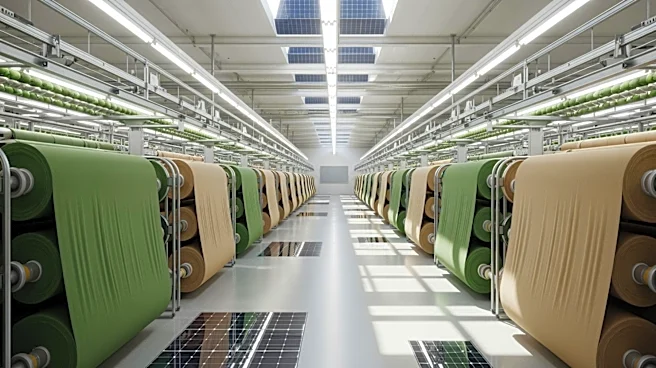
Epic Group, a prominent apparel manufacturer, has inaugurated its Trimetro Manufacturing Campus in Khurda, Odisha. This $100 million facility is India's first fully net-zero carbon and net-zero water garment
manufacturing unit. The campus, which spans 40 acres, is designed to produce 20 million garments annually for leading global brands. It was financed by a $100 million debt package from the International Finance Corporation (IFC) in 2024, which included sustainability-linked and green loans. The facility is expected to create 10,000 direct jobs, with 80% of the workforce being women. The campus integrates renewable energy sources such as solar power, sustainable biomass, and battery storage to achieve net-zero carbon emissions. Additionally, it features advanced water conservation and recycling systems to maintain a net-positive water balance.
Why It's Important?
The inauguration of this facility marks a significant step towards sustainable manufacturing in the apparel industry. By achieving net-zero carbon and water usage, the Trimetro Manufacturing Campus sets a new standard for environmental responsibility in garment production. This development aligns with Odisha's vision of becoming a hub for sustainable and employment-intensive industries, potentially strengthening its position in the global apparel supply chain. The creation of 10,000 jobs, predominantly for women, also highlights the social impact of the project, contributing to economic empowerment and gender equality in the region. The facility's focus on sustainability could influence other manufacturers to adopt similar practices, promoting a broader shift towards environmentally friendly production methods.
What's Next?
The success of the Trimetro Manufacturing Campus could encourage further investments in sustainable manufacturing facilities in India and beyond. As global brands increasingly prioritize sustainability, the demand for environmentally responsible production is likely to grow. This could lead to more partnerships and financing opportunities for similar projects. Additionally, the facility's model of integrating renewable energy and water conservation could serve as a blueprint for future manufacturing units, potentially influencing industry standards and regulations. Stakeholders, including government bodies and environmental organizations, may closely monitor the campus's performance to assess its impact on sustainability and economic development.