





What's Happening?
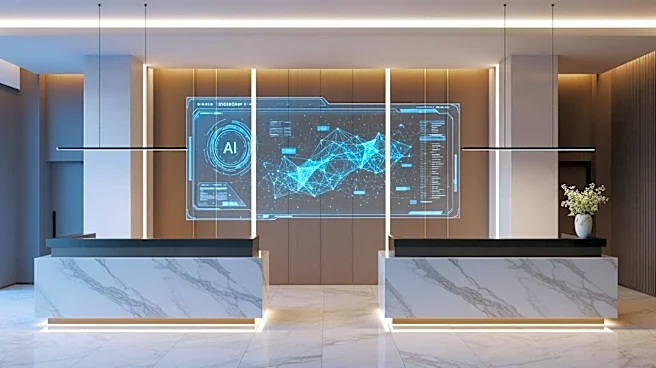
The hospitality industry is increasingly adopting agentic AI to streamline operations and improve efficiency. Autonomous AI agents are being integrated into various hotel functions, such as guest services, housekeeping, pricing, and payments. However,
the primary challenge is not the technology itself but the readiness of hotel staff to work effectively alongside these systems. The industry faces a significant skills gap, with many employees lacking practical AI fluency. This includes understanding AI's capabilities, verifying its outputs, and knowing when human intervention is necessary. The successful implementation of AI in hotels requires treating it as a change management challenge, emphasizing clear communication, role-specific training, and collaboration with technology partners.
Why It's Important?
The integration of AI in the hospitality sector presents a major opportunity to reduce operational complexity and improve profit margins by automating repetitive tasks. However, the lack of AI skills among hotel staff poses a risk to these benefits. Without proper training and understanding, employees may struggle to use AI systems effectively, potentially leading to inefficiencies and compromised guest experiences. The industry's ability to harness AI's potential depends on equipping staff with the necessary skills and confidence to work with intelligent systems. This shift could redefine the role of human employees, emphasizing the importance of empathy and personal connection in guest interactions.
What's Next?
For hotels to successfully adopt AI, leaders must focus on change management strategies. This involves clearly communicating the changes AI will bring to various roles, ensuring employees understand what tasks will remain human-centric, and how success will be measured. Training programs should be developed to enhance AI fluency among staff, enabling them to interact confidently with AI systems. Additionally, hotels should foster stronger partnerships with technology providers to support the transition. As AI takes on more routine tasks, the human element of hospitality will become increasingly important, requiring a balance between technology and personal service.