
What's Happening?
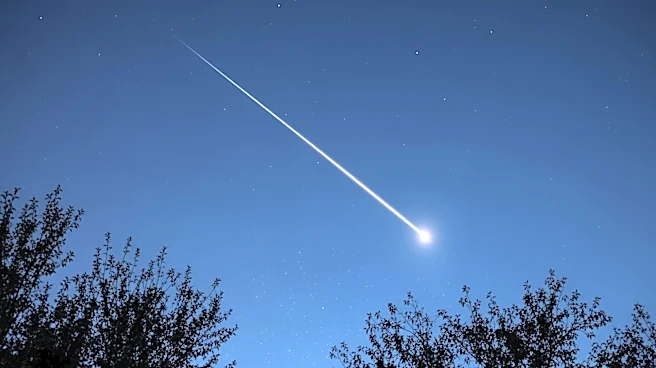
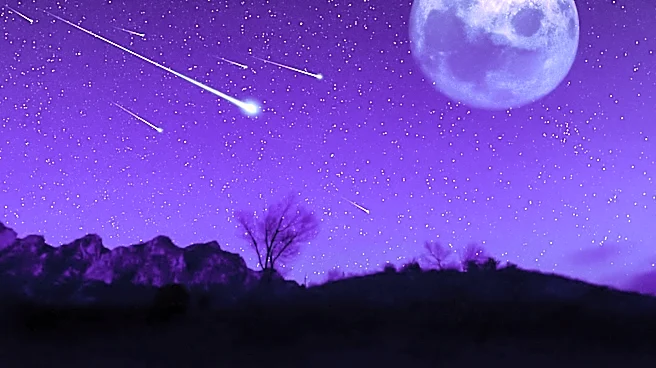
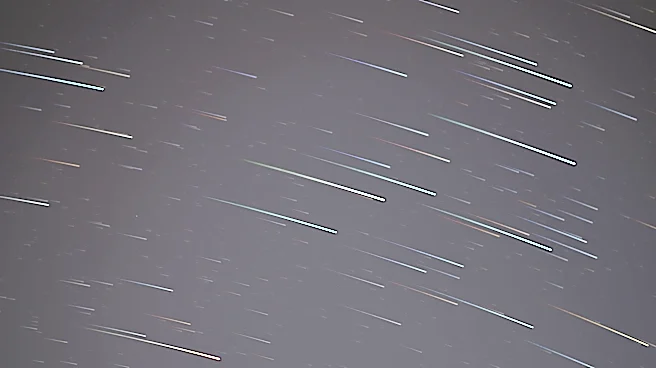
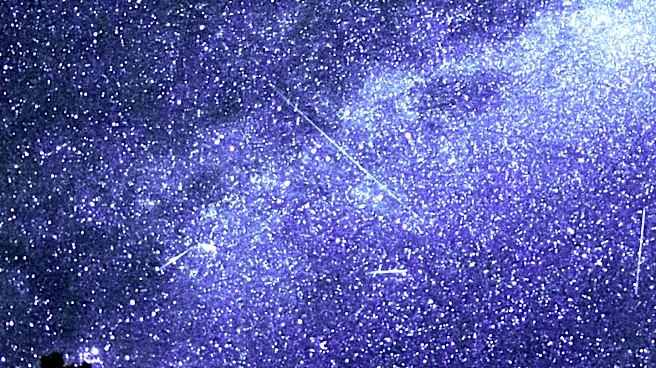
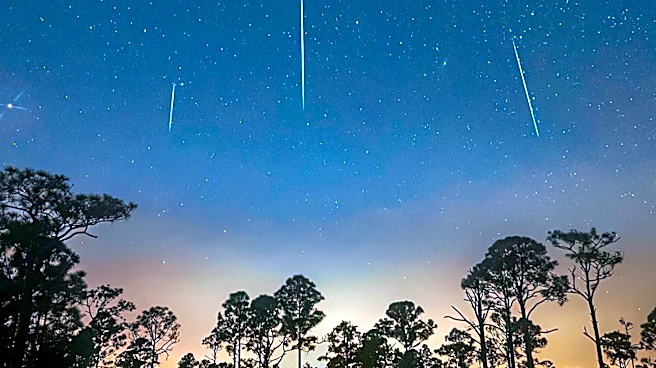
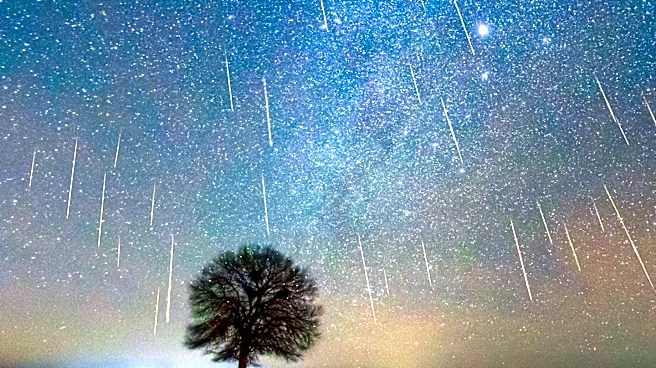
The Lyrid meteor shower is set to peak on the evening of April 22nd, offering a celestial display visible from the northern hemisphere. The shower is caused by debris from Comet C/1861 G1, known as Thatcher,
which takes 415 years to orbit the sun. Meteors will radiate from the constellation Lyra, visible in the eastern sky after sunset. Observers can expect to see between 10 and 18 meteors per hour under clear, dark skies. The event provides an opportunity for stargazers to witness a natural spectacle.
Why It's Important?
Meteor showers like the Lyrids offer a chance for public engagement with astronomy, fostering interest in space science. Observing such events can enhance understanding of celestial mechanics and the solar system's dynamics. The Lyrids provide a unique opportunity for educational outreach, encouraging amateur astronomers and enthusiasts to explore the night sky. This annual event highlights the importance of preserving dark skies for astronomical observations.