






What's Happening?
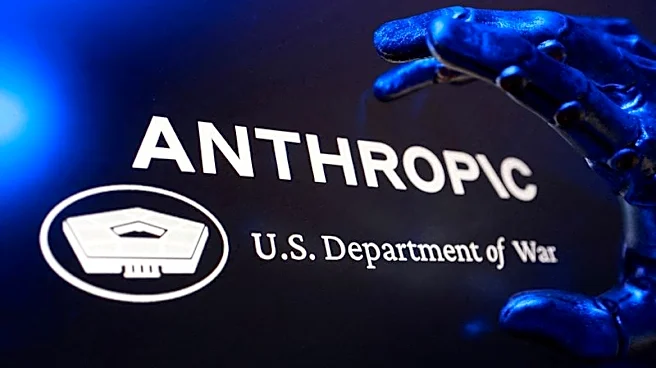
A federal appeals court in Washington, D.C., has refused to block the Pentagon from blacklisting the artificial intelligence company Anthropic. This decision comes amid a legal battle over the Pentagon's ability to deploy Anthropic's Claude chatbot in autonomous
weapons and potential surveillance activities. The court's ruling contrasts with a previous decision by a San Francisco federal court, which had ordered the Trump administration to remove a national security risk label from Anthropic. The San Francisco court found that the administration had overstepped its bounds, allowing Anthropic to continue its operations without the stigmatizing label. Despite the setback in Washington, Anthropic remains optimistic about resolving the issue, with further evidence to be presented in a hearing scheduled for May 19.
Why It's Important?
The conflicting court decisions highlight the ongoing tension between national security concerns and the advancement of AI technology in the U.S. The outcome of this legal battle could significantly impact the business landscape for AI companies, as they navigate regulatory challenges while competing globally. The Pentagon's actions and the court's ruling create uncertainty for U.S. companies striving for leadership in AI, potentially affecting their ability to innovate and collaborate with military contractors. This case underscores the delicate balance between ensuring national security and fostering technological innovation, with implications for the future of AI development and deployment in the U.S.
What's Next?
The next steps involve a scheduled hearing on May 19, where further evidence will be presented to the appeals court. The outcome of this hearing could determine whether Anthropic can continue its operations without the constraints imposed by the Trump administration. The decision will likely influence how AI companies engage with government contracts and navigate national security regulations. Stakeholders, including technology trade groups, are closely monitoring the situation, as the resolution could set a precedent for future interactions between AI companies and the U.S. government.