
What's Happening?
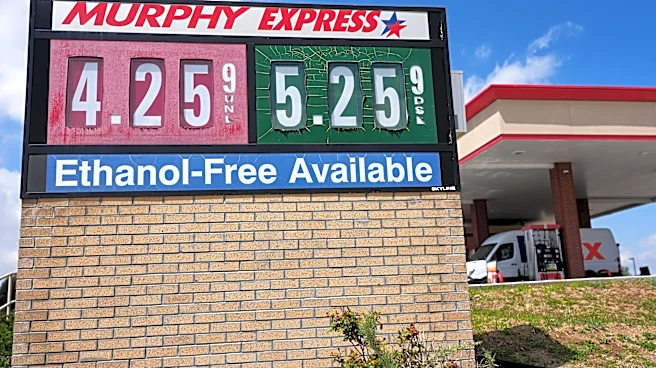
A recent report from the Federal Reserve Bank of New York highlights the disproportionate impact of rising gas prices on lower-income Americans following the Iran war. Despite reducing their gas consumption
by 7%, households earning less than $40,000 annually spent 12% more on gas in March. In contrast, higher-income households increased their gas spending by 19% while only slightly reducing consumption. This disparity underscores the 'K-shaped economy,' where wealthier individuals continue to thrive while lower-income groups struggle. The report compares these findings to a similar situation in 2022, noting that poorer households benefited more from government stimulus programs at that time.
Why It's Important?
The spike in gas prices and its uneven impact on different income groups highlight ongoing economic inequalities in the U.S. Lower-income households are disproportionately affected, as they spend a larger share of their income on essentials like fuel. This situation exacerbates the 'K-shaped economy,' where economic recovery benefits higher-income individuals more than those with lower incomes. The findings suggest a need for targeted economic policies to support vulnerable populations and address systemic disparities. Understanding these dynamics is crucial for policymakers aiming to create a more equitable economic environment.