
What's Happening?
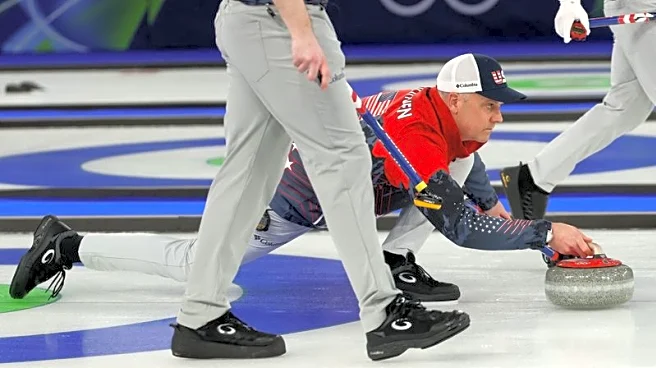
Rich Ruohonen, a 54-year-old personal injury lawyer from Brooklyn Park, Minnesota, has made history by becoming the oldest person to compete for the United States at the Winter Olympics. Ruohonen participated
in the U.S. men's curling match against Switzerland, stepping in as a substitute when the team was trailing 8-2. Despite the challenging circumstances, his participation was met with enthusiasm and support from teammates and fans alike. Ruohonen, who has been a six-time winner of 'Minnesota Attorney of the Year,' joined the team as an alternate for skip Danny Casper, who has Guillain-Barre syndrome. His role on the team extends beyond the ice, as he acts as a mentor and supportive figure for his younger teammates, who affectionately refer to him as an honorary uncle.
Why It's Important?
Ruohonen's participation in the Winter Olympics highlights the inclusivity and diverse age range in sports, particularly in curling, where experience and strategy are as crucial as physical prowess. His involvement underscores the potential for athletes to compete at high levels regardless of age, challenging traditional perceptions of athletic prime. This event also brings attention to the sport of curling, which often receives less media coverage compared to other Olympic sports. Ruohonen's story may inspire older athletes and individuals to pursue their passions and remain active in competitive sports. Additionally, his dual role as a lawyer and athlete exemplifies the balance between professional careers and athletic pursuits, encouraging others to pursue multifaceted lives.
What's Next?
Ruohonen's participation in the Olympics may lead to increased interest and participation in curling, particularly among older athletes. His story could inspire more people to take up the sport, potentially leading to a broader demographic representation in future competitions. The U.S. curling team will continue to compete in the Winter Olympics, with Ruohonen's experience and mentorship likely contributing to the team's dynamics and performance. As the Olympics progress, the team will aim to improve their standings and capitalize on the experience gained from competing on the world stage.
Beyond the Headlines
Ruohonen's journey to the Olympics also highlights the evolving nature of sports training and preparation. His commitment to early morning workouts and balancing a demanding legal career with athletic training reflects the dedication required to compete at an elite level. This story sheds light on the personal sacrifices and time management skills necessary for athletes who juggle multiple responsibilities. Furthermore, Ruohonen's presence on the team bridges generational gaps, providing a link between traditional and modern approaches to the sport, which could influence future training methods and team compositions.