


What's Happening?
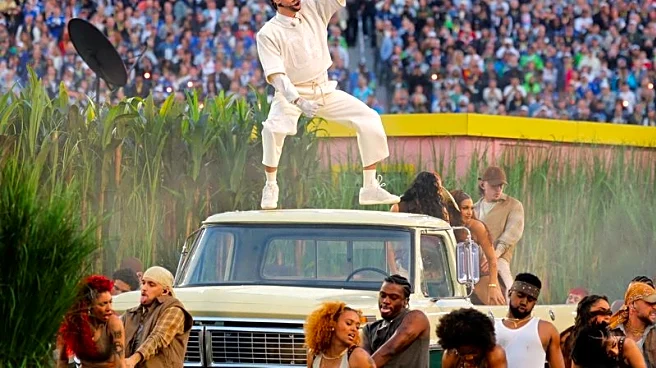
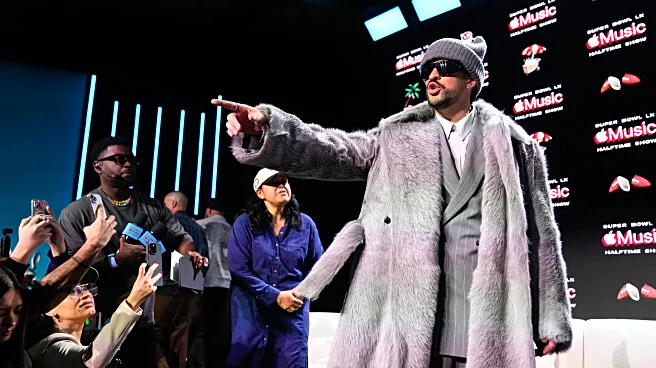
During Super Bowl LX, brands demonstrated innovative strategies to capture audience attention beyond traditional TV advertising. The event, which has evolved into a social media spectacle, saw brands like Apple Music and Kraft Mac & Cheese excel by engaging audiences through social platforms. Apple Music, without purchasing ad breaks, dominated halftime discussions by sponsoring a culturally significant performance by Bad Bunny, which highlighted Hispanic and Spanish-language culture. Meanwhile, Kraft Mac & Cheese effectively inserted itself into real-time conversations, maintaining high visibility without relying on a single major ad spot. Celebrity endorsements also played a role, with figures like George Clooney and the Backstreet Boys enhancing
brand campaigns. However, the event underscored that star power alone is insufficient without strong creative ideas.
Why It's Important?
The Super Bowl's shift from a purely TV-centric event to a social media-driven phenomenon reflects broader changes in advertising strategies. Brands that successfully integrated social media engagement with their campaigns were able to sustain audience interest and conversation, highlighting the importance of adaptability in marketing. This shift has significant implications for the advertising industry, as it suggests that traditional metrics of success, such as airtime, are becoming less relevant compared to social media impact. Companies that can navigate this landscape stand to gain a competitive edge, while those relying solely on conventional methods may struggle to maintain visibility.
What's Next?
As brands continue to adapt to the evolving media landscape, future Super Bowls are likely to see even more emphasis on social media engagement and real-time interaction. Companies may increasingly invest in digital strategies that allow them to participate in ongoing conversations rather than focusing solely on high-cost TV spots. This trend could lead to more innovative and interactive advertising approaches, potentially reshaping how major events like the Super Bowl are leveraged for brand promotion.