





What's Happening?
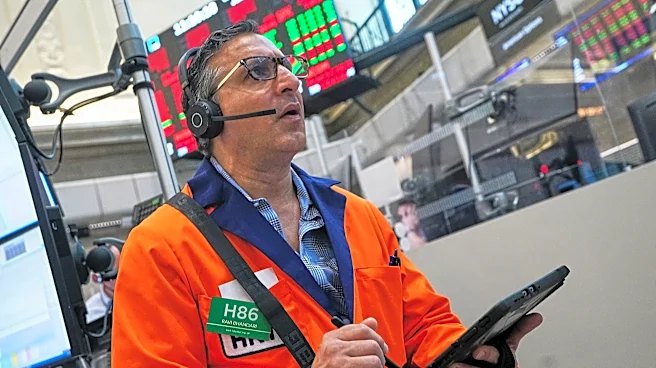
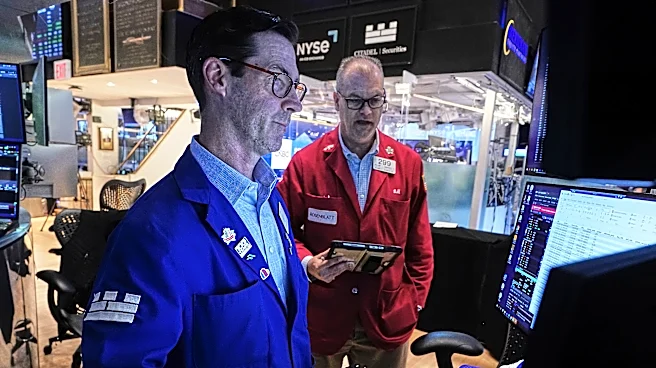
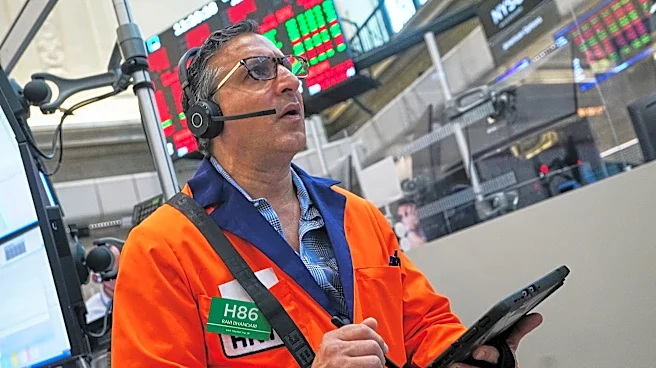
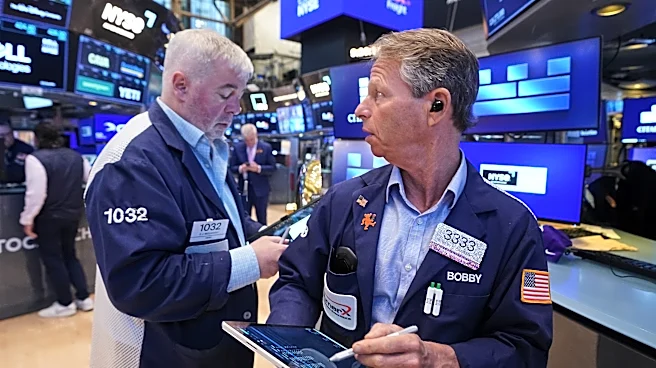
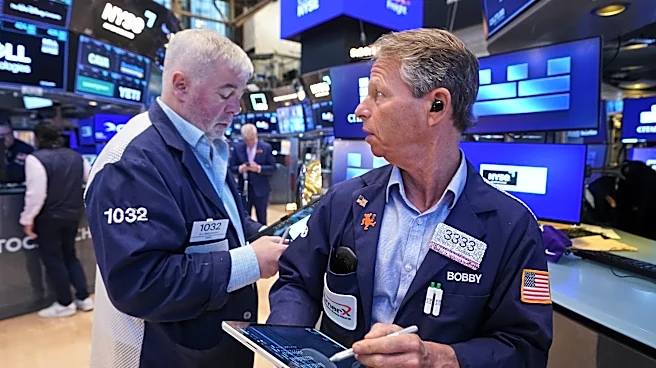
Wall Street experienced a mixed trading session as falling oil prices and bond yields provided relief to U.S. stocks, while AI-related stocks saw declines. The Dow Jones Industrial Average surged by 874 points, reaching a record high, while the S&P 500
index rose by 0.4%, marking its 10th gain in 11 days. However, the Nasdaq composite slipped slightly by 0.1%. The drop in oil prices, down 2.8% to $95.03 per barrel, was attributed to expectations that the U.S. and Iran might reopen the Strait of Hormuz, potentially easing inflation pressures. Despite strong profit reports from U.S. companies, AI stocks like Broadcom and Micron Technology saw significant losses, with Broadcom falling 12.6% despite surpassing profit and revenue expectations. Analysts suggest that AI stocks may have become overvalued, leading to a potential market slowdown.
Why It's Important?
The developments on Wall Street highlight the volatility and shifting dynamics within the U.S. stock market. The record high for the Dow Jones reflects investor optimism driven by easing oil prices and strong corporate earnings. However, the decline in AI stocks suggests a potential correction in the tech sector, which has been a significant driver of market gains. The mixed economic reports, including a slight increase in unemployment benefit applications, indicate potential challenges for the U.S. job market. The reopening of the Strait of Hormuz could have significant implications for global oil supply and inflation, affecting various economic stakeholders.
What's Next?
Investors will be closely monitoring geopolitical developments between the U.S. and Iran, as any agreement to reopen the Strait of Hormuz could further stabilize oil prices and impact inflation. Additionally, the performance of AI stocks will be under scrutiny, as analysts assess whether the recent declines signal a broader market correction. Economic indicators, such as unemployment data, will also be watched for signs of a potential slowdown in the U.S. economy. Companies in sectors outside of AI may continue to benefit from lower borrowing costs due to falling bond yields.