






What's Happening?
Vineyard Wind has filed a lawsuit against GE Renewables in Boston civil court, alleging breach of contract and plans to abandon the offshore wind project by April 28. The lawsuit claims that GE's exit would likely lead to the project's failure, leaving
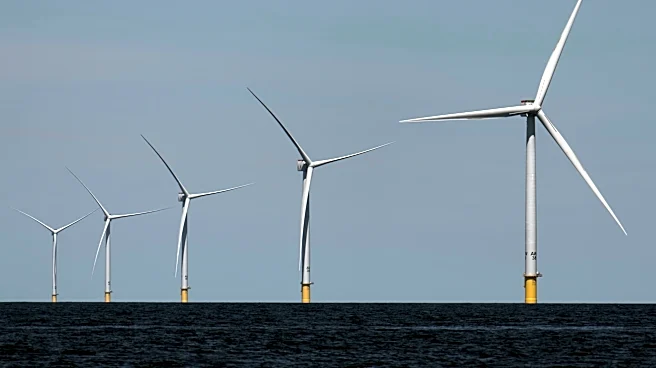
the wind farm unable to deliver promised power output to Massachusetts residents. Vineyard Wind has completed the installation of 62 turbines, but they are not fully operational, producing power below intended levels due to nonconformities that only GE personnel can address. The complaint highlights GE's poor performance and delays, including a catastrophic blade failure in 2024, which Vineyard Wind claims has resulted in over $800 million in damages. GE, on the other hand, has cited unpaid claims exceeding $300 million as the reason for its termination notice. The legal dispute threatens the $4.5 billion project's ability to repay $2 billion in loans, risking foreclosure and project survival.
Why It's Important?
The lawsuit underscores significant challenges in the U.S. renewable energy sector, particularly in offshore wind projects. Vineyard Wind's legal action against GE Renewables highlights the complexities and risks associated with large-scale clean energy initiatives. The project's potential failure could impact Massachusetts' clean energy goals and the broader push for renewable energy in the U.S. If Vineyard Wind cannot deliver on its power contracts, it may face financial repercussions, affecting investors and lenders. The case also illustrates the competitive and secretive nature of the offshore wind industry, where proprietary information is closely guarded, complicating project management and collaboration. The outcome of this legal battle could set precedents for future contracts and disputes in the renewable energy sector.
What's Next?
A hearing is scheduled for April 16 at Suffolk Superior Court in Boston, where GE is expected to respond to the complaint by April 15. Vineyard Wind is seeking a preliminary injunction and temporary restraining order against GE to prevent the abandonment of the project. The court's decision will be crucial in determining the project's future and the legal responsibilities of both parties. Stakeholders, including environmental groups and government agencies, will be closely monitoring the case, as its resolution could influence policy and investment in offshore wind energy. The legal proceedings may also prompt discussions on improving contract management and transparency in the renewable energy industry.