







What's Happening?
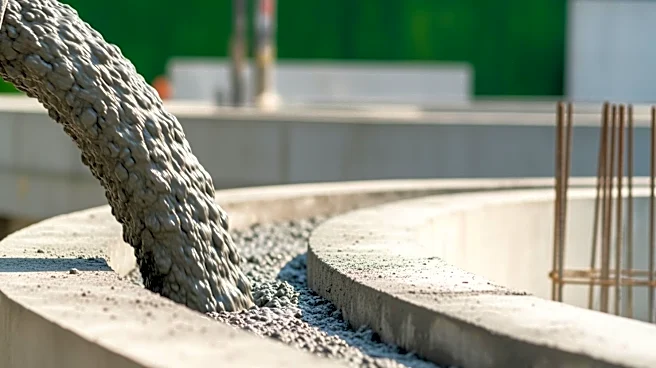
Self-compacting concrete (SCC) is gaining attention in the construction industry due to its ability to flow under its own weight without the need for mechanical vibration. Developed in Japan in 1988, SCC is designed to address challenges in construction,
such as the need for skilled labor and the difficulty of compacting concrete in densely reinforced structures. SCC's unique properties, including high passing ability, filling ability, and segregation resistance, make it suitable for complex architectural designs and infrastructure projects. The use of mineral admixtures like fly ash, metakaolin, and waste marble powder in SCC formulations enhances its performance by improving workability, strength, and durability while reducing environmental impact.
Why It's Important?
The adoption of SCC in construction projects offers significant benefits, including reduced labor costs, decreased noise pollution from vibrators, and improved structural integrity. By incorporating industrial by-products like fly ash and waste marble powder, SCC not only enhances the mechanical properties of concrete but also addresses environmental concerns related to waste disposal. This approach aligns with sustainable construction practices, promoting resource efficiency and reducing the carbon footprint of building materials. The development of SCC with ternary blends of cementitious materials further optimizes performance, making it a viable solution for modern infrastructure demands.
What's Next?
As the construction industry continues to evolve, the demand for innovative materials like SCC is expected to grow. Future research and development efforts will likely focus on refining mix designs and establishing standardized testing methods to ensure consistent quality and performance. The integration of SCC in large-scale projects could drive further advancements in construction technology, paving the way for more sustainable and efficient building practices. Stakeholders, including engineers, architects, and policymakers, may advocate for broader adoption of SCC to meet the increasing demands for resilient and eco-friendly infrastructure.
Beyond the Headlines
The shift towards SCC represents a broader trend in the construction industry towards embracing materials that offer both technical and environmental advantages. The use of SCC can lead to a reduction in construction time and costs, while also minimizing the potential for human error. Additionally, the incorporation of waste materials into SCC formulations highlights the industry's commitment to circular economy principles, where waste is repurposed as a valuable resource. This approach not only enhances the sustainability of construction practices but also contributes to the development of greener urban environments.