
What's Happening?
The Spring Triangle, a celestial formation visible in the Northern Hemisphere, is formed by the stars Arcturus, Spica, and Regulus. This asterism becomes visible in late March and remains in the sky through spring and much of summer. The stars belong
to the constellations Boötes, Virgo, and Leo, respectively. As the Earth orbits the Sun, these constellations come into view together shortly after the spring equinox, giving the Spring Triangle its name. Stargazers can view this formation by looking towards the eastern and southern horizon around 10 p.m. local time. For those having difficulty locating the stars, apps like Star Walk or web-based maps such as Stellarium.org can be helpful. An alternative version of the Spring Triangle includes the star Denebola instead of Regulus, forming a more symmetrical triangle.
Why It's Important?
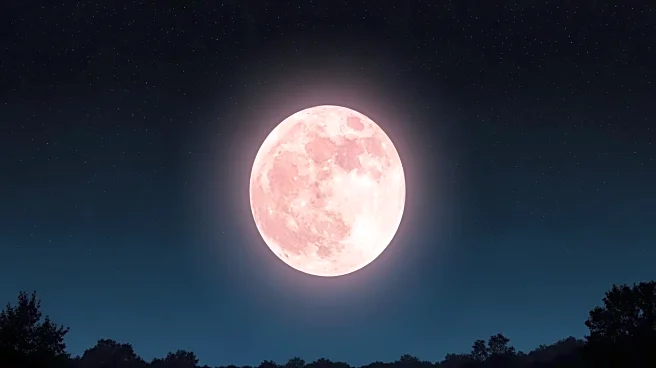
The visibility of the Spring Triangle offers an opportunity for amateur and seasoned astronomers alike to engage with the night sky, fostering interest in astronomy and science. This celestial event not only provides a visual spectacle but also serves as an educational tool, illustrating the movement of constellations and the Earth's orbit around the Sun. The Spring Triangle's appearance coincides with other astronomical events, such as April's Pink Moon and meteor showers, enhancing its appeal. By encouraging public interest in stargazing, such events can inspire future generations to explore scientific fields and contribute to a broader understanding of our universe.