




What's Happening?
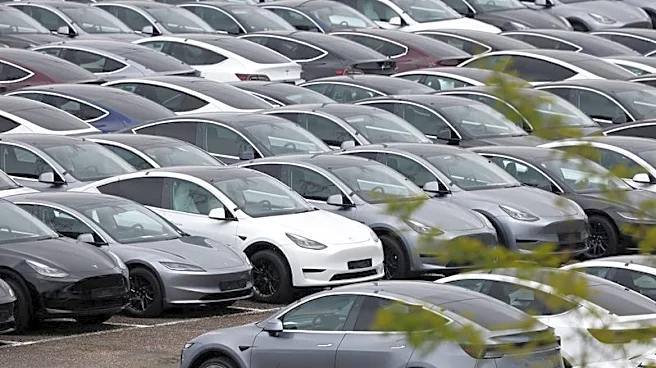
Tesla has introduced its Model 3 Premium Rear-Wheel Drive (RWD) in Canada at a significantly reduced price of $39,490 CAD (approximately $29,000 USD). This price reduction is made possible by manufacturing the vehicle at Tesla's Giga Shanghai factory,
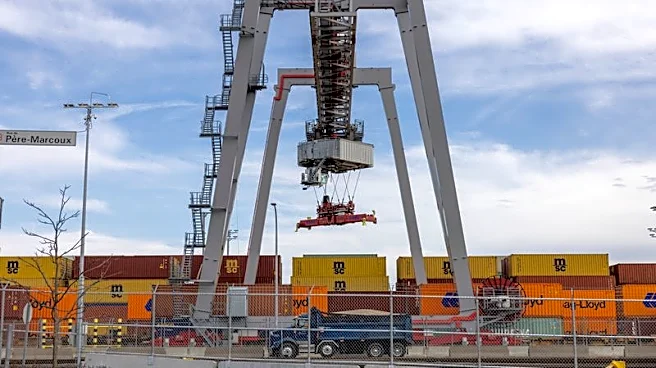
following a decrease in Canadian tariffs on Chinese-made electric vehicles. Previously, Tesla relied on its Fremont, California factory due to high tariffs on Chinese imports and counter-tariffs on US-made vehicles. The Shanghai-built Model 3 offers Canadian consumers a more affordable option with an estimated range of 463 to 491 kilometers on a single charge. However, this model does not qualify for Canada’s Electric Vehicle Affordability Program rebate of $5,000 CAD, as it is not domestically produced. This strategic move by Tesla highlights the influence of international manufacturing and tariff policies on the pricing and availability of electric vehicles in Canada.
Why It's Important?
The introduction of a more affordable Tesla Model 3 in Canada underscores the impact of international trade policies on consumer pricing and market accessibility. By leveraging Chinese manufacturing, Tesla can offer competitive pricing, potentially increasing electric vehicle adoption in Canada. This move could pressure other automakers to explore similar strategies to remain competitive. Additionally, it highlights the complexities of global supply chains and the role of tariffs in shaping market dynamics. While Canadian consumers benefit from lower prices, the exclusion from the national rebate program may limit the model's appeal to cost-conscious buyers. This development also reflects broader trends in the automotive industry towards globalization and the strategic use of international manufacturing to optimize costs.
What's Next?
Tesla's decision to manufacture the Model 3 in China for the Canadian market may prompt other automakers to reassess their production strategies, potentially leading to increased competition in the electric vehicle sector. Canadian policymakers might also revisit tariff and rebate policies to better align with the evolving automotive landscape. As Tesla continues to expand its global manufacturing footprint, further price adjustments and model introductions could follow, influencing market dynamics and consumer choices. The automotive industry will likely see increased focus on balancing cost efficiencies with local production incentives, shaping future trade and manufacturing policies.