
What's Happening?
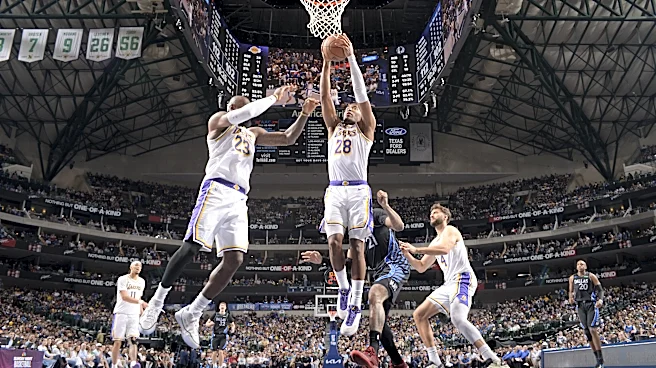
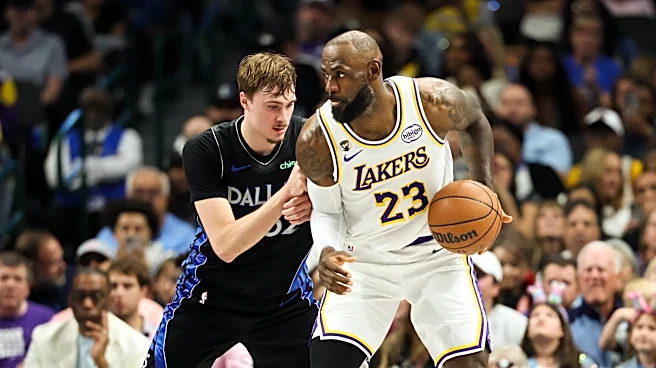
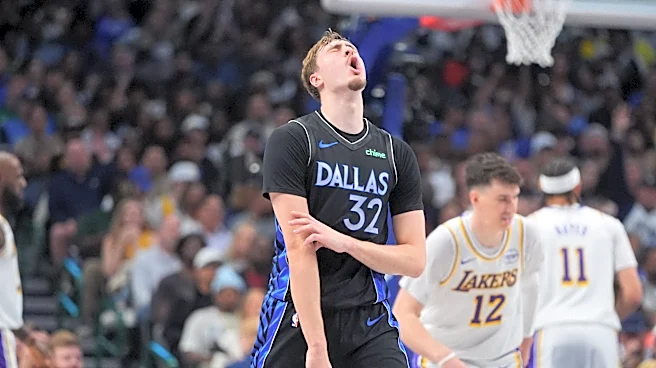
LeBron James, a veteran NBA player, has expressed that he sees similarities between his early career and that of Cooper Flagg, a rising star in the league. Flagg, who recently scored 45 points in a game
against the Los Angeles Lakers, is being compared to James for his role as a franchise player at a young age. James praised Flagg's dedication and work ethic, noting that the young player is handling the pressures of being a team leader well. This comparison comes after Flagg's impressive performance, which included 8 rebounds and 9 assists, helping his team, the Dallas Mavericks, secure a victory over the Lakers. James, who scored 30 points in the same game, reflected on his own experiences as a young player and the importance of being given the opportunity to learn and grow through challenges on the court.
Why It's Important?
The comparison between LeBron James and Cooper Flagg highlights the emergence of new talent in the NBA and the ongoing evolution of the league. Flagg's performance and potential as a franchise player could have significant implications for the Mavericks, potentially boosting their competitiveness and marketability. For the NBA, the rise of young stars like Flagg ensures the continuation of high-level competition and entertainment, which is crucial for maintaining fan engagement and league profitability. Additionally, James' endorsement of Flagg underscores the importance of mentorship and the passing of the torch from seasoned players to the next generation, which is vital for the sport's growth and sustainability.
What's Next?
As Cooper Flagg continues to develop his skills and gain experience, he is likely to become a central figure in the NBA's future landscape. The Mavericks will aim to build a strong team around him to maximize their success. Meanwhile, LeBron James' role as a mentor and veteran leader will continue to be influential, both on and off the court. The dynamics between emerging talents and established stars will shape the league's narrative in the coming seasons, potentially leading to shifts in team strategies and player development approaches.