






What's Happening?
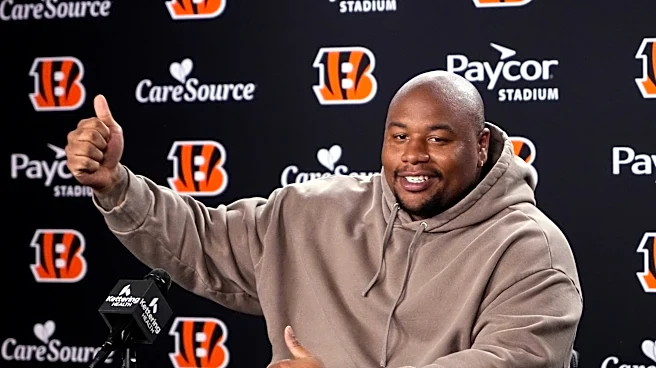
Joe Burrow, the Cincinnati Bengals quarterback, is facing scrutiny regarding his value in the 2026 fantasy football drafts. Despite a promising start to his career, including a Super Bowl appearance and an MVP-worthy season, Burrow's frequent injuries
have raised concerns. He has played in only 35 of a possible 51 regular-season games over the past three seasons. Fantasy analysts are debating whether Burrow is overvalued, as his current average draft position (ADP) places him as the QB3, despite comparable or better performances from quarterbacks like Dak Prescott and Matthew Stafford, who have lower ADPs. The discussion highlights the risks associated with drafting Burrow high in fantasy leagues.
Why It's Important?
Joe Burrow's situation is significant for fantasy football enthusiasts and NFL teams alike. His injury history and current valuation in fantasy drafts could influence how managers approach their draft strategies, potentially opting for quarterbacks with lower ADPs who offer similar or better performance. This scenario also reflects broader concerns about player durability and the impact of injuries on team performance and player marketability. For the Bengals, Burrow's health and performance are crucial to their success, and any prolonged absence could affect their competitiveness in the league. The analysis of Burrow's fantasy value underscores the importance of balancing potential and risk in player evaluations.
Beyond the Headlines
Beyond the immediate implications for fantasy football, Joe Burrow's situation raises questions about the long-term management of player health and career longevity in the NFL. The league's physical demands and the frequency of injuries among key players like Burrow highlight the need for effective injury prevention and management strategies. Additionally, the discussion around Burrow's fantasy value reflects broader trends in how player performance is assessed and valued, both in fantasy sports and real-world team management. As teams and fantasy managers navigate these challenges, the emphasis on player health and strategic decision-making will continue to shape the landscape of professional football.