


What's Happening?
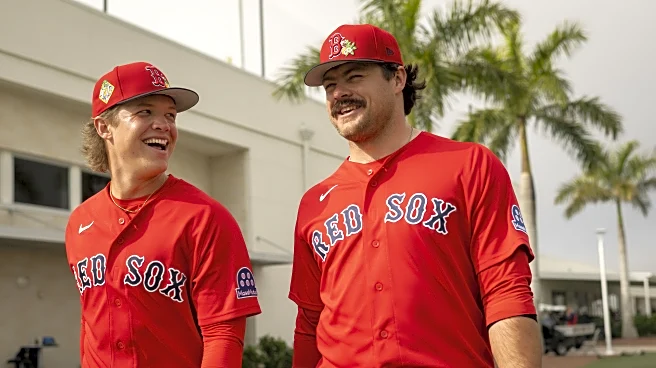
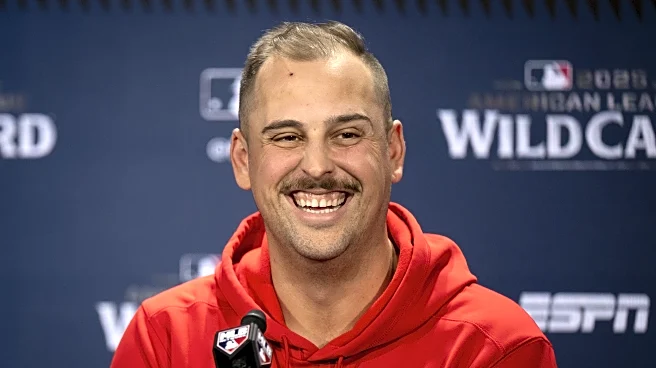
Connelly Early, a promising rookie for the Boston Red Sox, has been confirmed as part of the team's starting rotation for the upcoming season. Manager Alex Cora announced that Early, a 23-year-old left-handed pitcher, will pitch the final game of Boston's
opening series against the Cincinnati Reds. Early's inclusion in the rotation follows an impressive spring training performance where he allowed only three earned runs over 17 innings. Despite strong competition from fellow rookie Payton Tolle and Johan Oviedo, Early secured his spot due to his standout performance. Tolle has been reassigned to Triple-A, while Oviedo will start the season in the bullpen. Early, ranked as ESPN's 48th prospect, made his major league debut last September and pitched in the American League wild-card round against the New York Yankees.
Why It's Important?
Connelly Early's addition to the Red Sox's starting rotation is significant for several reasons. It highlights the team's confidence in his abilities and potential to contribute significantly throughout the season. Early's performance could impact the Red Sox's overall success, especially given the competitive nature of the American League. His development and performance will be closely watched as he represents a new generation of talent for the team. Additionally, his inclusion over other promising players like Payton Tolle underscores the depth and strategic decisions within the Red Sox organization, which could influence their performance in the long run.
What's Next?
As the season progresses, Connelly Early will have the opportunity to establish himself as a key player in the Red Sox's rotation. His performance in the opening series against the Reds will be crucial in setting the tone for his season. The Red Sox will likely monitor his development closely, adjusting their strategy as needed to maximize his potential. Early's success could also influence future roster decisions, particularly regarding other young talents like Payton Tolle and Johan Oviedo. The team's management will need to balance immediate performance with long-term player development to maintain competitiveness.