







What's Happening?
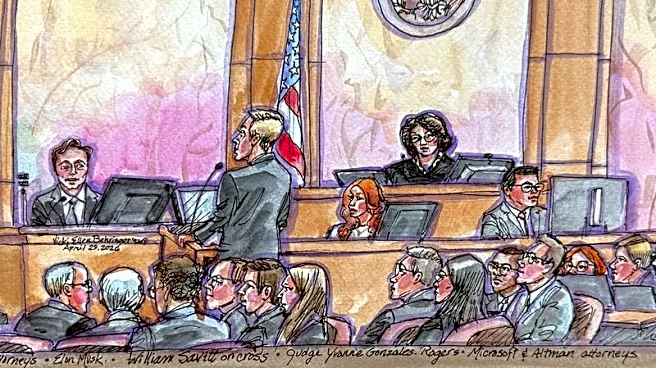
In a recent court case in Oakland, California, Federal Judge Yvonne Gonzalez Rogers reprimanded Tesla CEO Elon Musk for his conduct during the trial against OpenAI and its CEO Sam Altman. The trial centers on Musk's allegations that Altman and OpenAI's
president, Greg Brockman, deviated from the company's original mission for personal gain. Musk, who co-founded OpenAI in 2015, claims that the company was intended to develop AI technology safely as a nonprofit. However, he accuses Altman and Brockman of betraying this mission. During the trial, Musk's behavior, including making provocative social media posts and comments in court, drew criticism from the judge. The trial has attracted significant public attention, with many spectators lining up to witness the proceedings.
Why It's Important?
This trial is significant as it highlights the ongoing tensions and ethical considerations in the development and commercialization of artificial intelligence. Musk's allegations against OpenAI raise questions about the governance and objectives of AI companies, especially those initially founded as nonprofits. The outcome of this trial could influence public perception and regulatory approaches to AI development. Additionally, Musk's conduct in court underscores the challenges of managing high-profile figures in legal settings, where their public personas can impact proceedings. The case also reflects broader societal concerns about the control and direction of AI technology, which has far-reaching implications for industries and public policy.
What's Next?
As the trial progresses, the jury will continue to evaluate the credibility of Musk's claims against OpenAI. The court's decision could have implications for the future operations of OpenAI and similar AI companies. It may also prompt discussions about the ethical responsibilities of tech leaders and the need for clear guidelines in AI development. Stakeholders in the tech industry, including policymakers and business leaders, will likely monitor the trial's outcome to assess its impact on AI governance and innovation.