

What's Happening?
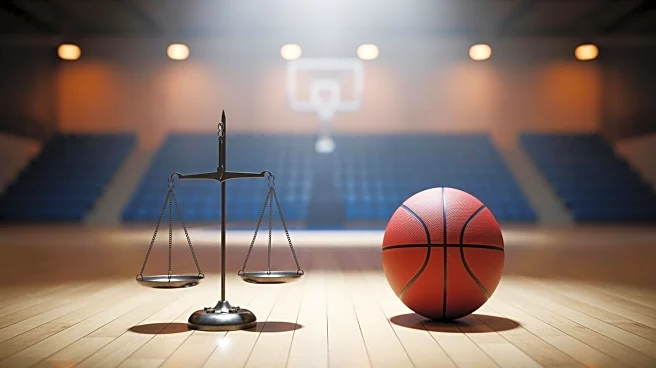
An Alabama judge has issued a temporary restraining order allowing Charles Bediako to play basketball for the University of Alabama, despite having signed contracts with NBA teams such as the Spurs, Nuggets, and Pistons. Bediako, who was not selected in the 2023 NBA draft, has been active in the NBA's G League. The restraining order is effective until January 27, when a hearing will determine the outcome of Bediako's motion for an injunction related to his lawsuit. The NCAA has expressed concern over this decision, stating that it undermines their eligibility rules and could potentially take opportunities away from high school athletes. The organization has called for congressional intervention to help enforce its rules.
Why It's Important?
This development highlights
ongoing challenges within the NCAA regarding player eligibility and the intersection of college and professional sports. The decision to allow Bediako to play could set a precedent for other athletes who have signed professional contracts but wish to return to college sports. This situation underscores the NCAA's struggle to maintain its eligibility rules amidst increasing legal challenges and calls for reform. The NCAA's request for congressional assistance indicates a potential shift towards more significant regulatory changes in college sports, which could impact athletes, universities, and the broader sports industry.
What's Next?
A hearing is scheduled for January 27 to address Bediako's motion for an injunction. The outcome could influence future cases involving athletes transitioning between college and professional sports. The NCAA may continue to seek legislative support to strengthen its eligibility rules, potentially leading to broader discussions about the rights of college athletes and the structure of college sports. Stakeholders, including universities, athletes, and legal experts, will likely monitor the situation closely, as it could have far-reaching implications for the governance of college athletics.