







What's Happening?
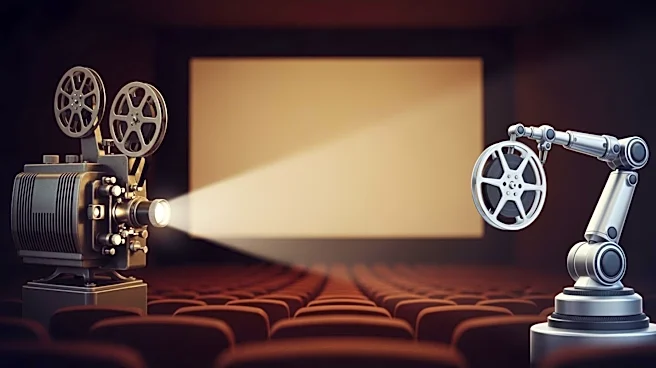
A new report from ScreenSkills highlights the growing impact of artificial intelligence (AI) on the UK film and TV industry, with some companies imposing strict internal controls. The report reveals that AI is being cautiously adopted, with concerns over
copyright and accuracy leading to limited use. While AI is seen as beneficial for repetitive tasks, its role in creative and legal areas remains contentious. The report also predicts potential layoffs as AI could replace certain roles, particularly in post-production and visual effects. The industry is urged to upskill its workforce to adapt to these technological changes.
Why It's Important?
The integration of AI into the film and TV industry represents a significant shift in how content is produced and managed. While AI offers efficiency and cost-saving benefits, it also poses risks to employment, particularly in roles that can be automated. This development could lead to a restructuring of the workforce, with a greater emphasis on skills that AI cannot replicate, such as creativity and interpersonal communication. The industry's response to these challenges will be crucial in determining the future landscape of media production and employment.
What's Next?
As AI continues to evolve, the film and TV industry will need to navigate the balance between technological advancement and job preservation. Companies may invest in training programs to help employees transition to new roles that require human creativity and oversight. Policymakers might also consider revising tax incentives and support structures to encourage innovation while protecting jobs. The industry's approach to AI will likely serve as a model for other sectors facing similar technological disruptions.