





What's Happening?
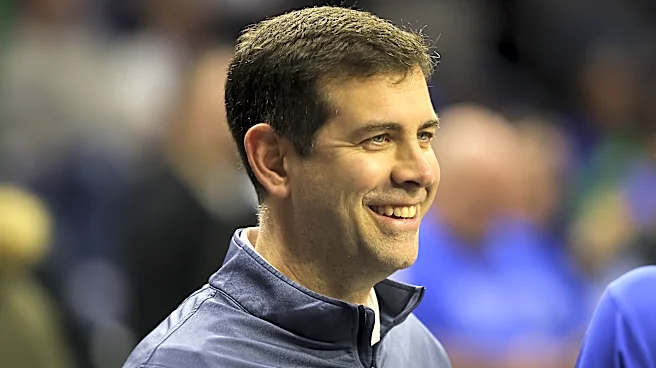
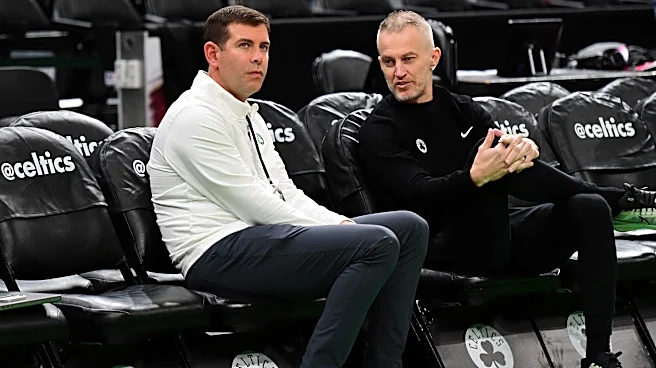
Danny Ainge was hired by the Boston Celtics in 2003 as the General Manager, later becoming the President of Basketball Operations. Ainge succeeded Chris Wallace, who had taken over from Rick Pitino in 2001. During his tenure, Ainge was instrumental in building
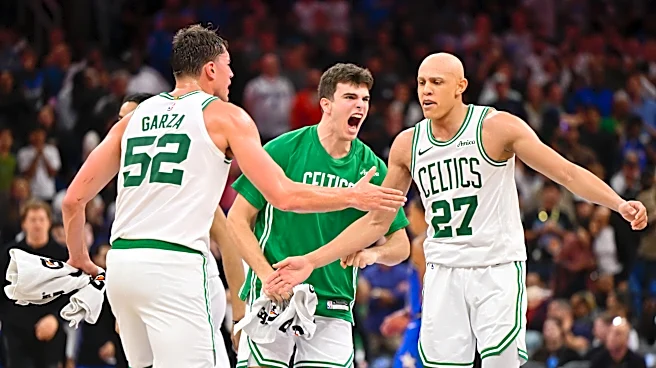
a championship-winning team, notably acquiring Ray Allen and Kevin Garnett, which led to the Celtics' 2007-08 NBA title. His strategic trades earned him the nickname 'Trader Danny.' Ainge's most notable trade involved sending Kevin Garnett and Paul Pierce to the Brooklyn Nets in 2013, a move that resulted in significant long-term benefits for the Celtics. Ainge stepped down in 2021 after facing personal health challenges, including a heart attack, and now holds a position with the Utah Jazz.
Why It's Important?
Danny Ainge's tenure with the Boston Celtics is significant due to his impact on the team's success and his reputation for making strategic trades. His ability to build a championship team in 2008 and his long-term planning through trades have left a lasting legacy on the franchise. Ainge's departure marked the end of an era for the Celtics, and his influence continues to be felt in the NBA, particularly with his current role at the Utah Jazz. His career highlights the importance of strategic management and decision-making in professional sports, influencing how teams are built and maintained.
What's Next?
With Ainge now working with the Utah Jazz, the Celtics have moved forward under new leadership. The team's future will depend on how well they can build on Ainge's legacy and adapt to the evolving dynamics of the NBA. The Celtics' management will need to continue making strategic decisions to maintain competitiveness in the league. Meanwhile, Ainge's role with the Jazz suggests he will continue to influence the NBA landscape, potentially bringing his expertise in team building and trades to another franchise.
Beyond the Headlines
Danny Ainge's career with the Celtics also highlights the broader challenges and pressures faced by sports executives. His health issues underscore the intense demands of high-level sports management. Additionally, his career trajectory reflects the evolving nature of NBA team management, where strategic trades and long-term planning are crucial for success. Ainge's story is a testament to the impact that effective leadership can have on a sports franchise's legacy and future.